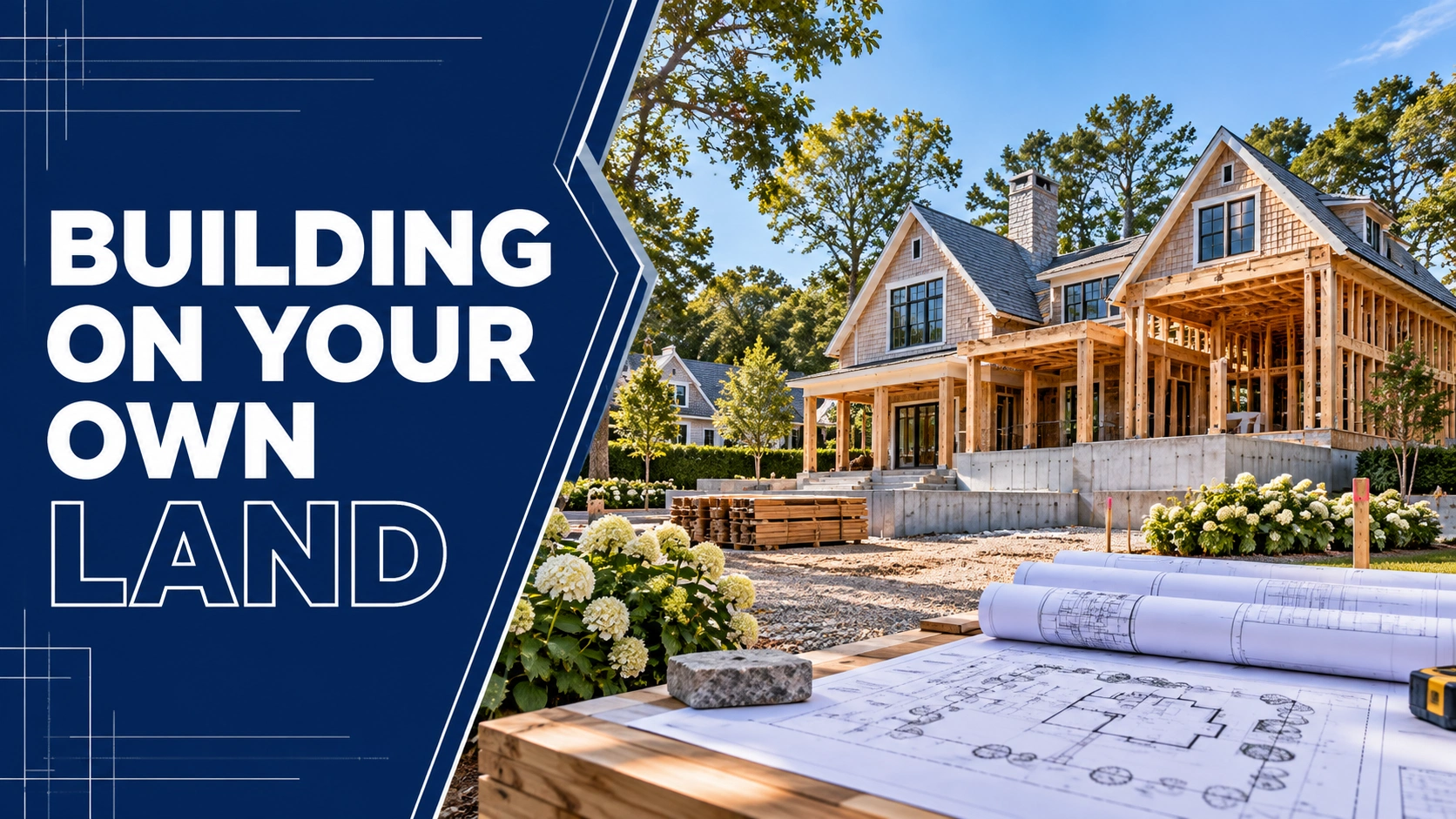
Custom home builders, design-build firms, and general contractors all build on land you already own, and in the Hamptons the right choice depends on how much design, site coordination, and oversight you want handled under one contract.
Key Takeaways
- Custom builders, design-build firms, and general contractors all build on owned land; the fit depends on how much you want handled under one contract.
- Owning the land removes the purchase from the budget but not site work, septic, or permitting.
- A current survey and a septic or utility assessment come before any reliable price.
- Wetlands, flood zones, and setbacks can shrink what a Hamptons lot will support.
- Rebuilding on an existing lot may not allow the same footprint as the current house.
- Land equity often counts toward construction financing, released in stages through draws.
Who Builds on Land You Already Own
Four kinds of builders typically take on projects on land an owner already holds: a Hamptons custom home builder, a design-build firm, a general contractor working from a separate set of drawings, and, less commonly, the owner acting as their own builder. Each can deliver a good result, but they divide design, site work, and accountability very differently.
The table below compares how each approach usually works on a property the owner already has.
| Who Builds | Design Handled By | Owner Coordination | Best For |
| Custom home builder | Builder’s design team or a design professional the owner hires | Moderate | Owners with a clear vision and a complex site |
| Design-build firm | Same firm, under one contract | Lower | Owners who want one point of accountability |
| General contractor | Separate design professional hired by the owner | Higher | Owners with finished drawings ready to bid |
| Owner-builder | Owner arranges everything | Highest | Experienced owners with time and trade relationships |
Some national builders also advertise build-on-your-lot programs, usually built around a set of standard plans. On a Hamptons property, where lot shape, water proximity, and local rules vary from one parcel to the next, a builder’s familiarity with the area tends to matter more than the size of the company.
What Changes When You Already Own the Land
Owning the land takes the purchase price out of the project budget, and that can make a build feel simpler than it is. The site itself is now fixed, which means the design has to adapt to the lot instead of the other way around, and every constraint the lot carries lands on the owner’s schedule and budget.
Financing also works differently. Many lenders count land equity toward the down payment on a construction loan, with money released in stages as work is finished and inspected. The draws released during construction need to line up with the builder’s payment terms, so that conversation belongs early, before a contract is signed.
An existing house on the property adds another layer. A teardown opens the door to a new design, but it also raises the question of what the current rules will let you rebuild, since an older house may sit closer to a boundary or to wetlands than new construction could.
Site Checks Before a Builder Can Price the Project
A builder can offer a rough range from a description, but a dependable price comes from understanding the lot. These are the checks that usually come first:
- A current survey showing boundaries, easements, and existing structures.
- Zoning review covering setbacks, lot coverage, and height limits.
- Septic and water assessment, including whether the lot relies on a well or a private system.
- Wetland, flood zone, and coastal setback review.
- Access, grading, drainage, and utility availability.
- Soil and tree conditions that affect the foundation and clearing scope.
Skipping any of these tends to move the surprise from the planning phase to the construction phase, where it costs more to fix. A site evaluation that covers all six gives the owner a firmer budget and a design that fits the property from the first sketch.
Hamptons Permitting and Environmental Factors
Hamptons lots come with considerations that a generic build-on-your-land guide won’t cover. Suffolk County now requires nitrogen-reducing septic systems for new construction in unsewered areas, and the system’s size and placement can influence where the house sits and how many bedrooms it can serve. Properties near bays, creeks, or tidal wetlands may face additional review from town and state environmental agencies, and flood zone mapping can affect foundation design and elevation.
Local zoning adds its own rules. Setbacks, lot coverage, and height limits vary by town and by zoning district, and some areas apply height rules that restrict upper stories well below the stated maximum. Because requirements differ across Southampton, East Hampton, Sag Harbor, and the surrounding villages, a builder with experience in the specific town can save weeks of back-and-forth during review.
Choosing Who Should Build on Your Property
Start with how much you want to coordinate. An owner who prefers a single point of responsibility usually leans toward a design-build firm, while an owner who already has finished drawings may do well with a general contractor. Owners weighing a middle path can look at semi-custom programs, which start from an engineered plan and then get checked against the site.
Ask each candidate how often they have built on lots with similar conditions, what their site-work scope includes, and how they structure payments. The broader trade-offs between delivery paths are covered in choosing between custom and spec, and the same questions apply when the land is already yours.
It also helps to ask how a builder handles surprises. Rock, high groundwater, a missing easement, or a tree the town requires you to keep can each change the scope after work begins, and a clear process for pricing and approving those changes protects the owner’s budget and the builder’s schedule alike.
Things to Know
- An existing house may be grandfathered in ways a new build can’t match, so confirm what’s allowed before demolition.
- Ask any builder what the site-work scope includes, since clearing, grading, and utilities are sometimes priced separately.
- Septic design can influence house placement and bedroom count.
- An older survey may miss easements or boundary changes, so check its date.
- Permitting timelines differ by town and by distance from water.
- Ask for references on projects with similar site conditions, not just similar finishes.
Frequently Asked Questions
Who can build a house on land I already own?
A custom home builder, a design-build firm, or a general contractor can all build on land you already own, and some builders run dedicated build-on-your-lot programs.
The difference is how much each one handles under a single contract. A design-build firm covers design and construction together, while a general contractor usually builds from drawings a separate design professional prepared. Matching the builder type to your site and your appetite for coordination matters more than the label.
Do I need a survey before talking to a builder?
Yes, a current survey is the first document a builder needs to judge what your property can realistically support.
A survey shows boundaries, easements, setbacks, and existing structures, which together define the buildable area. An older survey can miss boundary changes or newly recorded easements, so many owners order an updated one before design work begins rather than after a price has already been discussed.
Is it cheaper to build on land I already own?
It removes the land purchase from the project budget, but site work, septic, and permitting can still add significant cost.
On many Hamptons lots, clearing, grading, drainage, utilities, and a nitrogen-reducing septic system are real line items that don’t disappear because the land is already paid for. A site evaluation before design starts gives a far more reliable number than a per-square-foot estimate alone.
Can I tear down an existing house and rebuild on the same lot?
Often yes, but the new house has to meet current zoning, setback, and environmental rules, which can limit what you’re allowed to rebuild.
An older house may sit closer to a property line or to wetlands than current rules would permit for new construction. Before committing to demolition, it’s worth confirming with a builder and the local town what footprint, height, and lot coverage a replacement house can actually have.
How does financing work when I already own the land?
Many lenders count the equity in your land toward the down payment on a construction loan, with funds released in stages as work is completed.
Terms vary by lender, so it helps to speak with one before finalizing a budget or a contract. The staged release of funds follows a draw schedule tied to inspected milestones, which is why the builder’s payment structure and the lender’s requirements need to line up from the start.
Putting the Right Team on Your Property
Owning the land is a strong starting point, but it doesn’t settle who should build on it or what the site will allow. The most reliable path starts with understanding the property before choosing a delivery method or a design.
Hamptons Luxury Design + Construction builds across Southampton, East Hampton, Sag Harbor, Water Mill, and the surrounding villages, working from the specific conditions of each lot. A site evaluation is the most reliable way to see what a particular property can support.