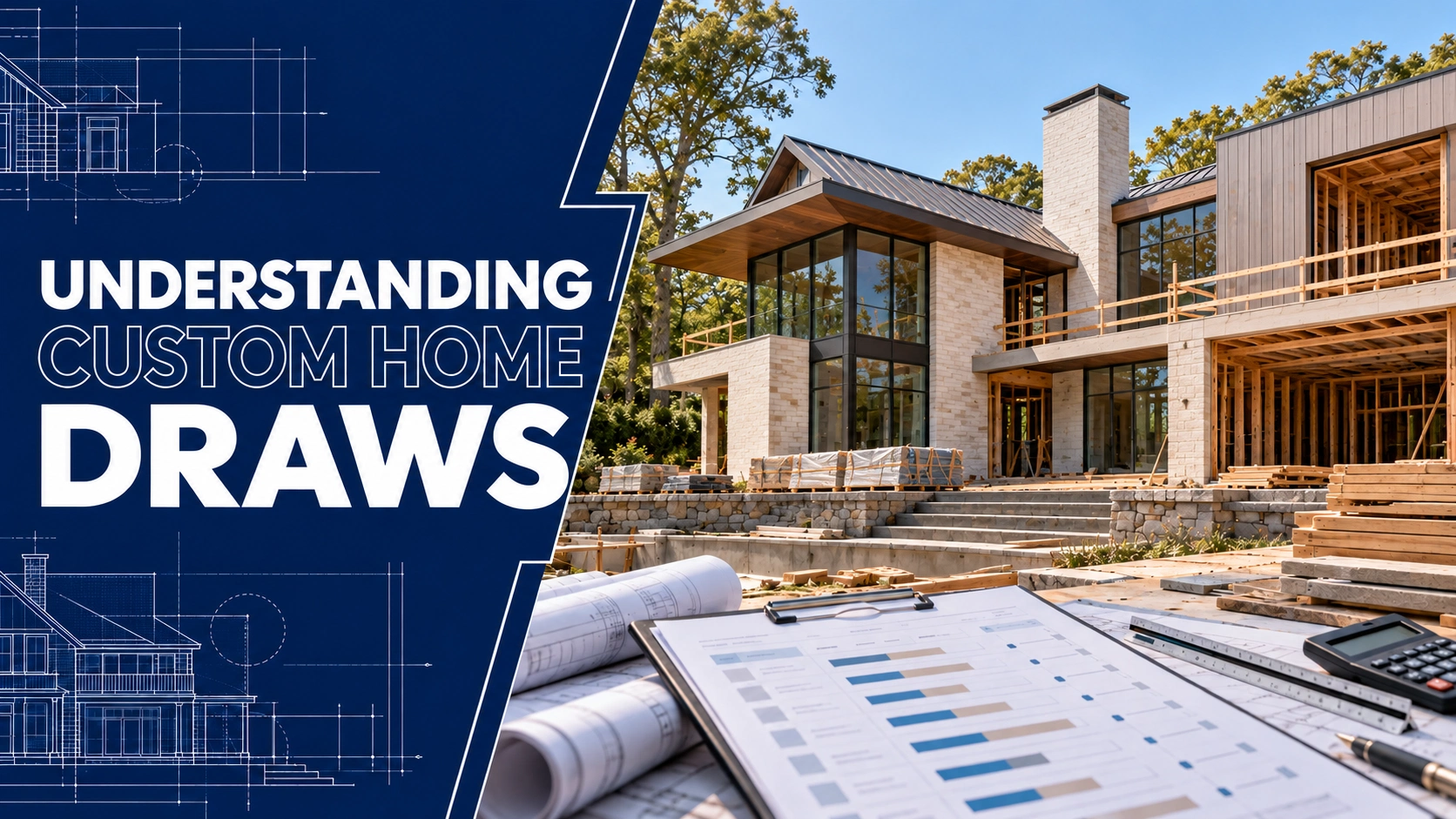
A construction draw schedule breaks the cost of a custom home into stage payments, each released after a defined milestone is complete, documented, and inspected, so you pay for progress rather than promises.
Key Takeaways
- A draw schedule ties each payment to a finished, verified stage of construction.
- Each draw typically needs a request, supporting invoices, an inspection, and lien waivers before funds move.
- Percentages and milestones are set in your contract and, with a loan, must satisfy the lender.
- A holdback, or retainage, is usually released only after the punch list is complete.
- With a construction loan, interest generally accrues only on the amount drawn so far.
- Custom orders and municipal inspections can shape when Hamptons draws fall due.
What a Construction Draw Schedule Is
A construction draw schedule is the agreed plan for how, when, and why money moves from the owner to the builder during a project. Instead of paying the full price up front or at the end, the owner pays in installments, called draws, each linked to a milestone such as a completed foundation or a dried-in roof.
On a custom home, the schedule matters more than on a smaller project because the build runs long and the amounts are large. A custom home construction firm builds the schedule into the contract so that both sides know what each payment represents before work begins.
The schedule also protects the owner. Paying against verified progress keeps the amount you have paid in step with the value in the ground, and it gives a natural checkpoint at each stage to review quality, schedule, and cost before moving on.
How Draw Payments Work Step by Step
The mechanics are similar from project to project, whether the owner pays cash or uses a construction loan. A typical draw runs like this:
- The builder reaches a milestone and submits a draw request with progress details and supporting invoices.
- The owner, or the owner’s representative, reviews the request against the contract and the work in the field.
- When a loan is involved, the lender’s inspector verifies progress on site.
- The builder provides lien waivers from itself and from the trades and suppliers being paid.
- Funds are released, and the builder pays its subcontractors and suppliers.
Approval and release can take several days, particularly when an inspection is required, so builders and owners usually plan the timing of requests around that review window. A schedule that accounts for the lag keeps work moving instead of waiting on payment.
A Sample Draw Schedule for a Custom Home
Actual milestones and percentages are written into each contract, and they depend on the project and the lender. The table below shows a common sequence of stages, with the documentation each draw usually requires.
| Draw Stage | Typical Milestone | Usually Documented With |
| Contract deposit | Signed contract, permits, engineering, early orders | Executed contract and permit status |
| Site and foundation | Excavation, footings, and foundation complete | Photos, inspection sign-off, invoices |
| Framing and roof | Structure framed and dried in | Photos, framing inspection, invoices |
| Mechanical rough-ins | Plumbing, electrical, and HVAC rough-ins and insulation | Trade inspections, lien waivers |
| Envelope and drywall | Exterior finishes on, drywall hung and finished | Photos, invoices, lien waivers |
| Interior finishes | Cabinets, trim, tile, and flooring installed | Photos, invoices, lien waivers |
| Completion and holdback | Substantial completion, then punch list closed | Certificate of occupancy, final waivers |
Each stage’s payment should be proportional to the value of the work completed, not simply the calendar. Early draws often include a larger share for custom-ordered materials and engineering, which is worth confirming in the contract.
Draw Schedules With a Construction Loan or Cash
With a construction loan, the lender controls when money is released and usually sends an inspector before each draw. Many lenders count land equity toward the down payment, which is common on build-on-your-lot projects, and interest typically accrues only on the amount drawn so far, so the monthly payment grows as the build advances.
With cash, there is no lender inspector, so the owner’s own review becomes the check. The structure also differs between delivery paths, and the spec versus custom trade-offs include how payments are handled before and after the buyer takes ownership.
Either way, the draw schedule and the loan documents should match. If the lender’s milestones and the builder’s contract describe the stages differently, requests can stall, so it helps to reconcile the two before construction starts.
Lien Waivers, Retainage, and Protecting Your Payments
Two tools protect the owner at each draw. A lien waiver is a document in which a builder, subcontractor, or supplier confirms it has been paid for the work covered by that draw. Retainage is a portion of payment held back until the work is complete. Together they help keep the project free of claims and give the builder a reason to finish the last items cleanly.
Practical habits help as well:
- Compare each draw request with the contract’s schedule and the work you can see on site.
- Collect waivers with every payment, and keep them organized.
- Review change orders before they are folded into a draw.
- Confirm that payments to subcontractors and suppliers are keeping up.
- Keep a running tally of amounts paid, amounts remaining, and the holdback.
New York’s Lien Law treats money paid for a construction project as funds the builder must apply to its subcontractors and suppliers, which is one more reason to collect waivers and ask for proof of payment. Owners who want an extra layer of review can bring in owner’s representative support to check requests against progress before they are paid.
The final holdback is usually released after the punch list is complete, and the closeout package sets the stage for the builder warranty terms that follow. This is general information, not legal advice, so an attorney can confirm how these rules apply to a specific contract.
Hamptons Factors That Shape the Draw Schedule
A few local conditions influence how a Hamptons draw schedule looks. Custom windows, stone, millwork, and mechanical equipment are often ordered months ahead, so deposits and early draws can be heavier than on a simpler build. Coastal and wetland-adjacent lots may add site work, drainage, and foundation requirements that front-load the early stages.
Municipal inspections also set the pace. Town building departments typically inspect foundations, framing, rough-ins, insulation, and the final, and a draw tied to a stage generally depends on that stage passing. Because some villages limit construction activity during the summer season, it helps to plan milestone dates with the calendar in mind, so a draw does not wait on work that cannot start.
Common Draw Schedule Mistakes to Avoid
Most draw problems come from vague terms agreed early and discovered late. These are the ones that cause the most friction:
- Paying ahead of progress, which leaves the owner exposed if work slows or stops.
- Milestones described loosely, so “framing complete” means different things to each side.
- Skipping lien waivers when the schedule gets busy.
- Folding unapproved change orders into a draw instead of settling them separately.
- Lender stages that do not match the contract’s stages.
- Retainage terms left unwritten, so nobody agrees when the final payment is due.
Each of these is easy to prevent when the schedule is reviewed line by line before signing. A short conversation about how milestones are defined and who signs off on each one saves far longer conversations later in the build.
Things to Know
- Ask to see the full draw schedule before signing the contract.
- Match the contract’s milestones to the lender’s draw requirements.
- Expect heavier early draws when custom items are ordered in advance.
- Collect lien waivers with every payment and keep copies.
- Confirm the retainage percentage and exactly when it is released.
- Plan for several days between a draw request and funds release.
Frequently Asked Questions
What is a construction draw schedule?
It is a payment plan that releases funds to the builder in stages as agreed construction milestones are completed and verified.
Each stage is tied to defined work, such as foundation complete or framing dried in, so payment follows progress. The schedule is set in the contract, and when a construction loan is involved it also has to satisfy the lender’s requirements.
How many draws does a custom home usually have?
Counts vary widely, but many custom homes fall somewhere between five and a dozen draws.
The number depends on the contract, the lender, and how finely the work is divided. More draws can mean smaller amounts tied to narrower milestones, while fewer draws are simpler to administer but release larger sums at once.
Who approves a draw request on a custom home?
The owner approves it, and when a construction loan is involved, the lender usually sends an inspector to verify progress before releasing funds.
Many owners also have an independent representative review the request against the work in the field. Checking the request against the contract’s schedule of milestones and the supporting invoices keeps each payment tied to completed work.
What is retainage on a custom home?
Retainage, also called a holdback, is a portion of payment withheld until the work is finished and the punch list is complete.
Holding back a portion gives the builder a clear reason to close out final items promptly. The percentage and the release conditions should be written into the contract so both sides know exactly when the money is paid.
Do I pay interest on the full construction loan during the build?
Typically no; interest is generally charged only on the amount drawn so far, though terms vary by lender.
Because funds are released in stages, the balance and the interest payment grow as the build progresses. Ask the lender how interest is calculated and whether payments are made monthly during construction.
Keeping Payments and Progress in Step on Your Hamptons Build
A clear draw schedule keeps payments honest and progress visible. When milestones, inspections, waivers, and the final holdback are spelled out in advance, the money follows the work and surprises stay small.
Hamptons Luxury Design + Construction builds across Southampton, East Hampton, Sag Harbor, Water Mill, and the surrounding villages. A site evaluation is a practical first step, and a good moment to ask how any builder you are considering structures draws, inspections, and closeout.