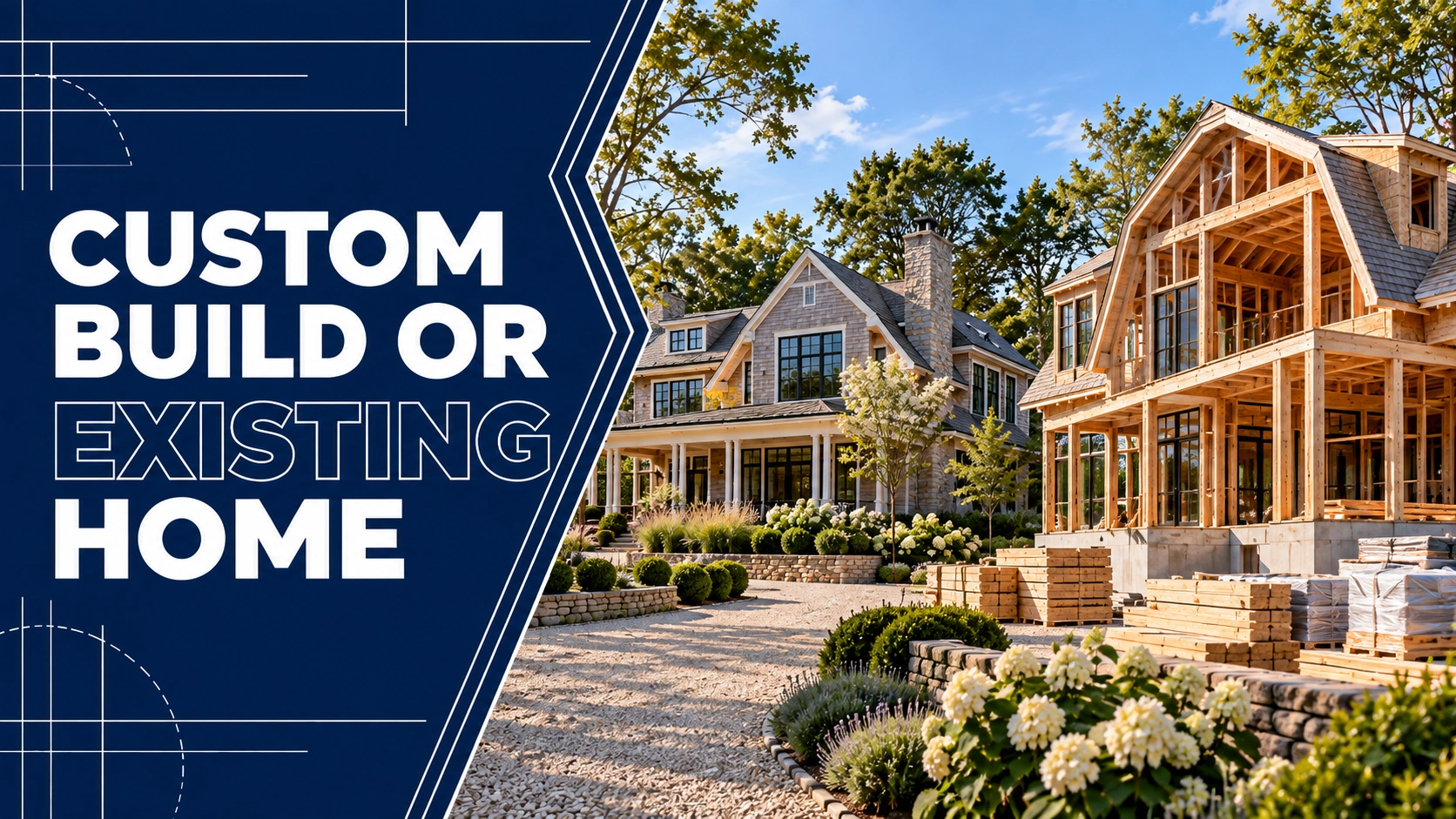
Build a custom home when you want control over layout, systems, and siting and can wait through design, permitting, and construction; buy an existing home when you need to move sooner or the house sits somewhere a new build could never replicate.
Key Takeaways
- Building gives control over layout, systems, and siting; buying gives speed and a finished result you can walk through.
- A custom build commonly runs well over a year from design to completion, while an existing home can close in weeks.
- Existing homes hide costs in older septic, mechanicals, drainage, and unpermitted work.
- Custom builds carry their own costs: site work, permitting, allowances, and staged draw payments.
- In the Hamptons, the lot and its footprint can be worth more than the house, which is where renovation or a rebuild enters.
- New construction usually comes with a builder warranty, while existing homes are typically sold as-is.
Building a Custom Home vs. Buying an Existing Home in the Hamptons
Most buyers who ask this question are really asking something else: is the house the asset, or is the land? In a market where a desirable lot in Southampton, East Hampton, or Sag Harbor can be hard to find and the house on it may be dated, that distinction tends to drive the decision more than price per square foot does.
Building means working with a full-service custom builder to design and construct a home around your lot, your routines, and your standards. Buying means accepting someone else’s decisions in exchange for speed, a visible finished product, and a more predictable closing date.
Buyers who are also looking at houses built before a buyer is secured can start with the spec home comparison, since a spec house sits between the two paths.
Where Building a Custom Home Wins
Control is the main advantage. Layout, ceiling heights, window placement, outdoor living, and mechanical capacity can all be planned around how the household actually lives, instead of adjusted after the fact. A new house is also built to current energy and building codes, and in coastal areas it can be designed for current flood zone and elevation requirements from the first drawing.
Systems and upkeep follow from that. New roofing, windows, mechanicals, and a nitrogen-reducing septic system mean fewer major replacements in the early years, and the owner knows what is behind the walls because it was documented as it went in.
Owners who want some of that control without a blank page can consider the semi-custom middle ground, where an engineered plan is refined to the lot and the owner’s selections.
Where Buying an Existing Home Wins
Speed and certainty are the clearest benefits. Closing can happen in weeks, the house can be walked through room by room, and what you see is largely what you get. For a family that needs to be in place for a season or a school year, that can matter more than design freedom.
Location and footprint matter as well. Some existing houses sit closer to the water, a village center, or a property line than current rules would allow a new house to sit, so the property may offer something a new build could not recreate. Mature landscaping, established hedges, and finished outdoor spaces also come with the purchase instead of needing years to grow in.
How the Two Paths Compare
The table below sets the two paths side by side on the factors Hamptons buyers weigh most.
| Factor | Building Custom | Buying Existing |
| Timeline | Design, permitting, and construction commonly run well over a year | Weeks to a few months to close |
| Layout control | Planned around your household and lot | Fixed unless renovated |
| Systems and code | New and built to current code | Varies by age; upgrades may be needed |
| Cost certainty | Firmer after pricing and contract; allowances need managing | Price known at purchase; upgrade costs surface after inspection |
| Site and zoning | Must meet current setback, coverage, and environmental rules | May carry an older footprint; future changes can be limited |
| Warranty | Builder warranty on completed work | Usually sold as-is |
No single row decides the question. A buyer with a fixed move-in date will weigh the timeline most heavily, while an owner focused on a particular lot will weigh site rules and layout control above the rest.
Hidden Costs and Surprises on Each Side
Existing homes tend to surface their surprises after the inspection. The ones that come up most often include:
- Older septic systems or cesspools that may need replacing with an approved nitrogen-reducing system.
- Aging roofs, windows, HVAC equipment, and electrical capacity.
- Additions or finished spaces without permits or a certificate of occupancy.
- Drainage, flood zone, or insurance issues that affect cost of ownership.
- Rules that limit how far an owner can later expand or rebuild.
A custom build has surprises of its own, though they tend to appear earlier and in writing. Site work such as clearing, grading, and utilities, permitting timelines that vary by town and by distance from water, allowance overruns on selections, and some villages’ limits on summer-season construction can all move cost and schedule. A clear contract, a defined process for allowances and changes, and payments released in stages against inspected milestones keep those moving parts visible.
When Renovating or Rebuilding an Existing Home Is the Better Middle Path
Many Hamptons buyers end up between the two options: buying an existing house for its lot and then updating it. A luxury home renovation works well when the structure, footprint, and location are sound and the investment goes into kitchens, baths, mechanical systems, and outdoor spaces rather than a new shell.
When the house itself is the limiting factor, a teardown and new build can make more sense, but only after confirming what current rules would let you rebuild. These checks usually come before that decision:
- Order a current survey and review setbacks, lot coverage, and height limits.
- Have the septic and water systems evaluated.
- Review flood zone and wetland mapping for the parcel.
- Confirm permits and certificates of occupancy for existing structures.
- Ask a builder for a rough range comparing renovation with a rebuild.
That last step is where early builder input pays off, because renovate-versus-rebuild is a pricing question as much as a design one, and the answer often changes once the lot’s real constraints are known.
Warranty and Financing Differences
New construction usually comes with a builder’s warranty covering defects in workmanship and materials after completion, while existing homes are typically sold as-is and leave repairs to the buyer. Terms differ by builder, so it helps to understand warranty coverage after completion before signing a construction contract.
Financing works differently too. A purchase usually closes with a mortgage funded in a single step, while a build is commonly financed through a construction loan whose funds are released in stages as inspected work is completed. Buyers planning a build benefit from speaking with a lender early and confirming that the builder’s payment terms line up with the lender’s requirements.
Things to Know
- Ask what a custom build’s timeline includes; design and permitting count, not just construction.
- Order a full inspection plus a separate septic and drainage evaluation on any older home.
- Confirm permits and certificates of occupancy for additions before buying.
- Check flood zone and coastal setback status early on either path.
- Ask any builder how allowances and change orders are handled.
- Get a lender’s view on construction financing before committing to build.
Frequently Asked Questions
Is it cheaper to build a custom home or buy an existing one in the Hamptons?
Neither is reliably cheaper; a custom build usually costs more upfront, while an existing home can add renovation, septic, and system costs after closing.
The fair comparison is total cost once the home is ready to live in, not the purchase price alone. An older house may need a new septic system, mechanicals, or permitted repairs, while a custom build carries site work, permitting, and allowance decisions that a builder can price before work starts.
How long does it take to build a custom home compared with buying one?
Buying an existing home usually closes within weeks to a few months, while a custom build commonly runs well over a year from design through completion.
A build’s timeline includes design, permitting, and construction, and permitting can run longer near water or in villages with extra review. Some villages also limit construction activity during the summer season, so the start date can matter as much as the construction length itself.
Should I buy an existing house and renovate instead of building new?
Renovating works when the structure, footprint, and location are worth keeping, while building new makes more sense when the lot or layout is the real asset.
A renovation spends money on the rooms and systems that matter most without starting over on the foundation and shell. When the house is dated, poorly placed on the lot, or limited by current setbacks, a teardown and rebuild may deliver more, but only after confirming what the rules allow you to rebuild.
What are the hidden risks of buying an older Hamptons home?
The most common are aging septic and mechanical systems, unpermitted additions, drainage or flood issues, and rules that limit later changes.
A standard inspection may not fully evaluate septic capacity, drainage, or the permit history of an addition. Many buyers add a septic evaluation, a flood zone review, and a check of certificates of occupancy before closing, so the surprises show up while there is still room to negotiate.
Does a custom home come with a warranty that an existing home doesn’t?
A new custom home normally comes with a builder warranty covering defects after completion, while an existing home is usually sold as-is.
Warranty terms differ from one builder to the next, so it helps to ask what is covered, for how long, and how a claim is handled before signing a contract. With an existing home, repairs generally fall to the buyer unless the seller’s disclosures or the sale terms say otherwise.
Matching the Path to Your Hamptons Property Goals
Neither path is better in general. The right choice depends on whether the house, the land, or the schedule matters most, and on how much the owner wants to shape the home rather than adopt it.
Hamptons Luxury Design + Construction works with owners across Southampton, East Hampton, Sag Harbor, Water Mill, and the surrounding villages, whether they are planning a new home, a major renovation, or comparing both on a specific property. A site evaluation is a practical way to see what a lot can support before committing to either route.