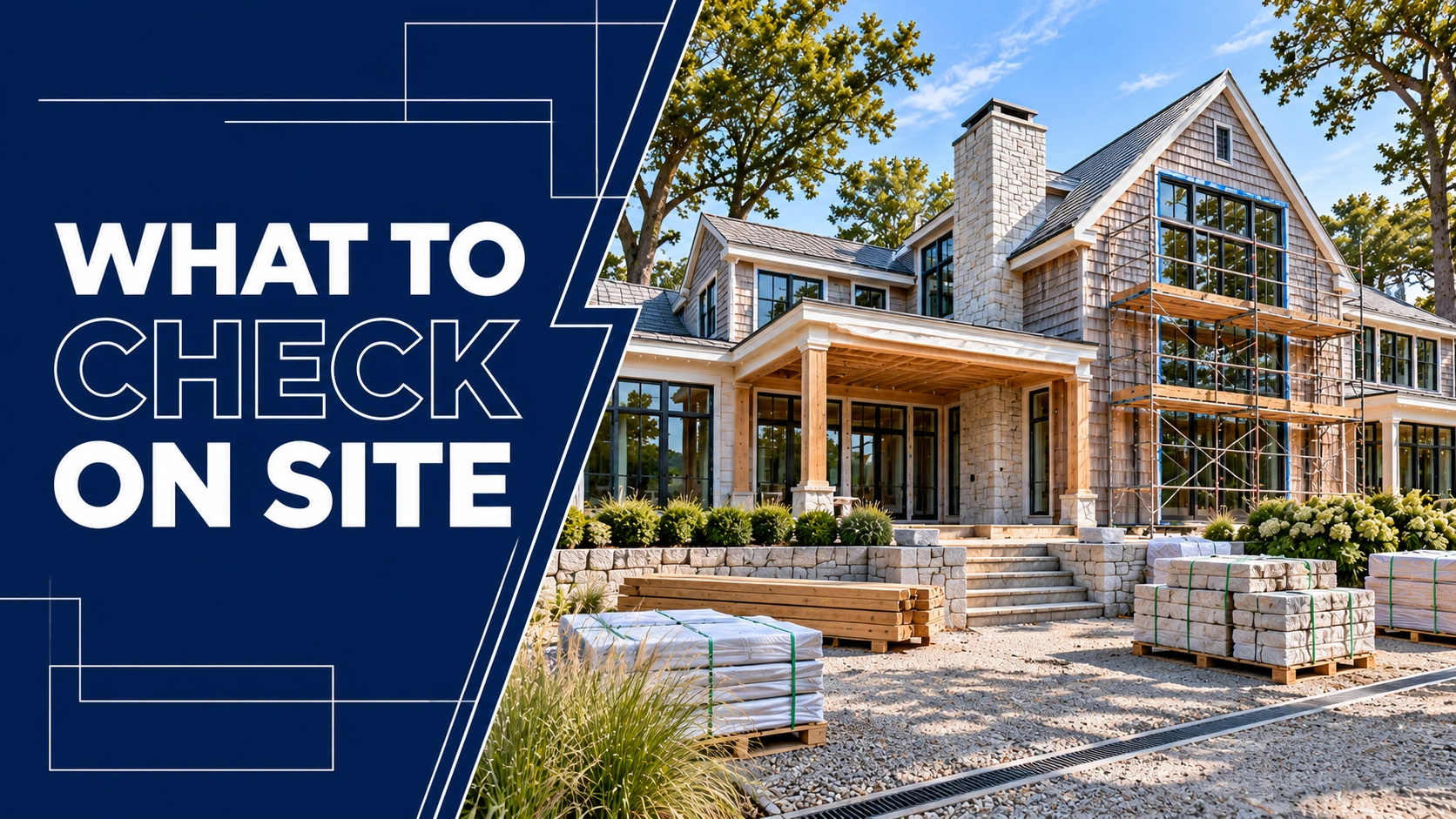
Construction monitoring services are independent, owner-side site visits that verify the work in place matches the plans, specifications, schedule, and payment requests, and record the findings in writing. A strong visit checks progress, conformance to the drawings, the quality of work about to be concealed, site conditions, and open decisions, and the checklist changes with each phase of the build.
This article walks through what to check phase by phase on a Hamptons project, which checks apply to every visit, and how to record what you find.
Key Takeaways
- Monitoring compares the work in place with your plans, specs, schedule, and billing, which building inspections don’t do.
- The most valuable visits happen before work is covered, including foundations, wall cavities, and rough-in.
- High water tables, flood zones, and salt air make drainage, waterproofing, and corrosion-resistant hardware priority checks on the East End.
- Dated photos and a short written report after every visit make payment reviews and warranty claims far easier.
- Concerns go to the builder’s project lead in writing, not to individual trades.
- Unexplained schedule slips, thin crews, and verbal-only changes are signs a visit needs follow-up.
What Construction Monitoring Services Include
Construction monitoring services are scheduled site visits that compare the work in place with the plans, specifications, schedule, and payment requests, and record the result. The aim is to catch problems while they are still cheap to fix, especially before work gets covered.
Monitoring is the on-the-ground part of a broader oversight role that also covers budget, decisions, and contractor accountability. Many homeowners get it by hiring an owner’s rep who visits independently of the builder and reports only to the owner.
It earns its place most in the scenarios where oversight pays off, such as ground-up builds, older homes, and review-heavy waterfront lots. The right time to hire is usually before ground is broken, so the earliest and most hidden phases are covered.
Who Checks What on a Hamptons Build
Several parties visit a construction site, and each checks something different. No single one of them covers everything an owner cares about.
| Who | What they typically check | What they don’t cover |
| Municipal building inspector | Code compliance at set stages, such as foundation, framing, insulation, and final | Whether the work matches your plans, selections, schedule, or pay requests |
| Engineer or special inspector | Structural elements and specific items within the engineer’s scope | Overall progress, finishes, and cost |
| Builder’s superintendent | Daily coordination of trades, deliveries, and site conditions | Independent verification, since the builder is checking its own work |
| Owner-side monitor | Work in place against plans, specs, schedule, and billing, with written records | Design decisions, code approvals, and directing trades |
| You | Overall progress, selections, and questions for the team | Technical depth, especially when you are away from the site |
The gap sits in the middle. Nobody on that list is required to confirm, as the work goes in, that it matches your plans and selections. Day-to-day construction management runs the site, and monitoring verifies it from the owner’s side.
Before the Visit: Know What You’re Checking Against
A visit is only as useful as the documents behind it. Bring the current plans and specifications, the construction schedule, approved selections, the change-order log, the latest payment request, and the previous visit’s report.
Timing matters more than frequency. Schedule visits just ahead of milestones that conceal work: before foundation backfill, before sheathing and cladding, before insulation and drywall, and before tile and cabinetry. Fast phases generally deserve closer attention than slow ones.
What to Check at Foundations and Site Work
Foundation work disappears for good once it is backfilled, so visits here carry the most weight. On the East End, high water tables and coastal soils make drainage and waterproofing central, and flood-zone lots add required elevations.
- Staking and setbacks match the approved site plan.
- Footing size, depth, and reinforcement match the structural drawings before the pour.
- Waterproofing and drainage are installed before backfill.
- Elevations on flood-zone lots match the approved documents.
- Erosion control and any wetland buffer protections are in place.
- Septic components, including nitrogen-reducing systems where required, match the approvals.
Photograph each item before it is covered, and confirm that required inspections and engineer sign-offs have happened.
What to Check During Framing and the Building Envelope
Water problems usually begin at details such as flashing, so check the envelope before cladding goes on. Salt air also makes hardware choices matter more near the coast.
- Framing dimensions and openings match the plans.
- Structural connectors and hardware match the drawings.
- Air and moisture barriers and window and door flashing are complete before cladding.
- Fasteners and hardware match the corrosion-resistant specification.
- Windows and doors delivered match what was ordered.
- In historic areas, exterior materials and colors match the Architectural Review Board approval.
Exposed materials and framing should also be kept dry between rain events.
What to Check at Rough-In and Insulation
Rough-in is the last chance to move wiring, plumbing, and ductwork cheaply. Custom lighting, audiovisual wiring, and mechanical equipment are far less expensive to relocate before drywall than after.
- Outlets, switches, lighting, valves, and equipment locations match the plans.
- Piping, wiring, and ductwork are supported and clearly labeled.
- Pressure tests and required rough-in inspections are complete.
- Insulation is continuous, without gaps around penetrations.
- Every wall cavity is photographed before drywall.
What to Check During Finishes and Closeout
Finish-phase visits compare the work with approved selections and samples. Tile layouts, cabinetry alignment, millwork joints, and window and door operation are all worth a close look, and a room-by-room punch list with dates keeps the final stretch organized.
Closeout is also paperwork. Collect warranties, manuals, as-built drawings, final lien waivers, and the certificate of occupancy, and ask the builder to demonstrate major systems before final payment.
Checks for Every Visit, and Warning Signs
Some checks apply on every visit, whatever the phase. Compare crew size and progress with the schedule, confirm long-lead deliveries are on track, note site safety and protection of finished work, and review open decisions. Then compare the work in place with the latest payment request, a habit covered in more detail under checking pay requests against work.
A few signs deserve prompt follow-up:
- Unexplained schedule slips or thin crews.
- Work out of sequence, or materials stored uncovered.
- Changes agreed verbally with nothing in writing.
- Payment requests that run ahead of visible progress.
Recording and Reporting What You Find
Take dated photos from the same vantage points each visit, and follow every visit with a short written report: observations, deviations from the documents, actions needed, and decisions waiting on the owner. Send concerns to the builder’s project lead in writing rather than directing individual trades.
These records feed payment reviews, change orders, and closeout. When interviewing representatives, ask to see a sample site report, since the quality of the reporting is a good preview of the quality of the oversight.
Things to Know
- Visit before work is covered, since footings, waterproofing, and wall cavities can’t be checked afterward.
- Ask for a dated written report after each visit, with photos and a list of open items.
- Building department inspections check code, not your plans or selections.
- In Architectural Review Board areas, confirm approved materials and colors before cladding and roofing go up.
- Windows, stone, and mechanical equipment can take months to arrive, so check delivery dates at every visit.
- Arrange site access through the builder and follow site safety rules, including protective gear.
Frequently Asked Questions
What are construction monitoring services?
Construction monitoring services are independent site visits and written reports that verify the work in place matches the plans, specifications, schedule, and billing.
For a homeowner, the monitor works for you rather than the builder. The visits complement building department inspections and engineer sign-offs instead of replacing them, and they focus on the questions those checks don’t answer.
How often should construction site visits happen?
Visits are best timed to milestones before work is concealed, with a regular cadence set by how fast the project is moving.
Fast, high-stakes phases such as foundations, framing, and rough-in usually call for closer attention than slower finish phases. Agree on the cadence in writing at the start, and add visits whenever a major element is about to be covered.
What should I photograph during a site visit?
Photograph anything that will be covered, including foundation waterproofing, wall cavities, and rough-in, with the date and location noted.
Photos taken before drywall, backfill, or cladding are hard to recreate and are often the only record of what sits behind a finished surface. Keep them organized by room or area so they can support a payment review or a warranty claim later.
Is a municipal building inspection the same as construction monitoring?
No, building inspectors check code compliance at set stages, not whether the work matches your plans, finishes, or billing.
An inspection can pass while a window is the wrong model or a fixture sits in the wrong place. Monitoring fills that gap by comparing the work with your documents, not just with the code.
Can I give instructions to the builder’s crew during a site visit?
It is better to raise concerns with the builder’s project lead in writing than to direct trades yourself.
Instructions given directly to a crew can blur who is responsible for a change and may create cost or schedule disputes later. A dated written note keeps the record clear and lets the builder respond properly.
Keeping a Clear View of the Work on Your Hamptons Build
Construction monitoring services give an owner a reliable picture of what is being built, phase by phase, especially the parts that will soon be hidden. The best visits are planned around milestones, backed by the project documents, and followed by a clear written record.
Hamptons Luxury Design + Construction works with owners in Southampton, East Hampton, Sag Harbor, Water Mill, and the surrounding villages. A conversation about your site and schedule is the quickest way to see which visits matter most on your project.