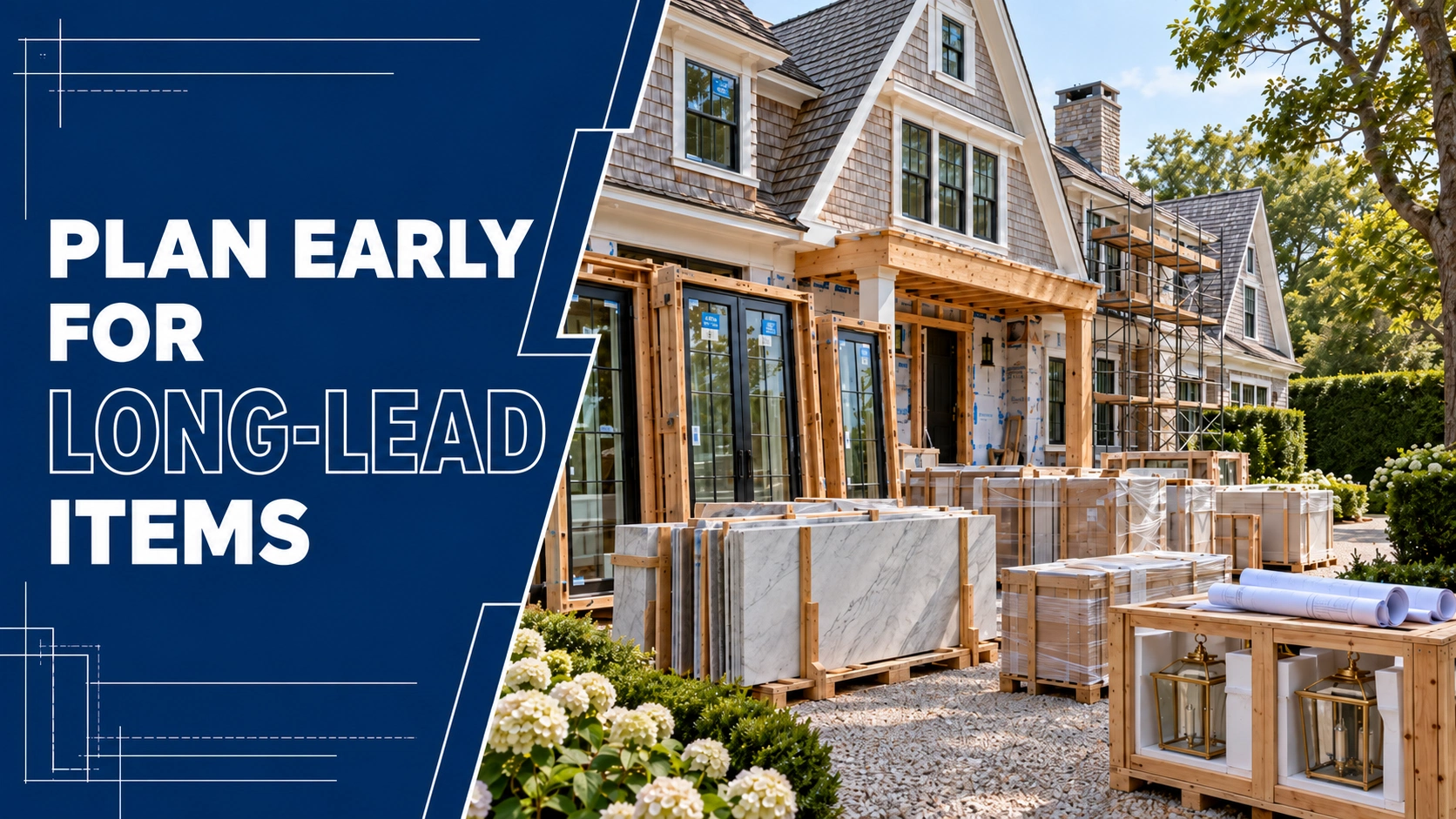
Long-lead items are materials or products, custom windows and doors, cabinetry, specialty stone, certain HVAC equipment, that take long enough to manufacture and deliver that ordering them late can delay the entire construction schedule. Selections need to be locked during design, not once construction has started.
This guide covers what actually qualifies as a long-lead item, when selections and orders need to happen, and what to know about deposits, storage, and delays before they become a schedule problem.
Key Takeaways
- Long-lead items are materials or products, custom windows and doors, cabinetry, specialty stone, certain HVAC equipment, that take long enough to manufacture and deliver that ordering them late can delay the entire construction schedule.
- Selections on long-lead items typically need to be locked during design, not once construction has started, since the ordering clock needs to start well before the item is actually needed on site.
- Custom cabinetry commonly takes 6 to 14 weeks to arrive after ordering, and it often can’t be finalized until appliance selections are locked, since cabinetry is built to fit specific appliance dimensions.
- Submittal approval, confirming the exact product matches the specification before it’s fabricated, is a required step for most long-lead items, not an optional formality.
- A deposit is typically required to start production on a custom long-lead item, which means the financial commitment happens well before the item physically arrives.
- Substituting a long-lead item mid-project because the original selection is delayed can affect the design in ways that ripple beyond the single item, particularly if other elements were designed around its exact dimensions.
What Actually Counts as a Long-Lead Item
A long-lead item is anything that takes long enough to specify, approve, manufacture, and deliver that ordering it late can delay the rest of the build. On a custom Hamptons home, this typically includes custom windows and doors, cabinetry, imported stone, specialty plumbing fixtures, certain HVAC equipment, and smart home components. Identifying these early is one of the more overlooked parts of planning before groundbreaking.
Not every material is long-lead. Standard, in-stock products can usually be ordered close to when they’re needed without risk. The distinction matters because treating every selection with the same urgency wastes attention on decisions that could wait, while genuinely long-lead items get selected too late to protect the schedule.
The table below outlines common long-lead items and the general range their lead times fall into.
| Item | Typical Lead Time |
| Custom Windows and Doors | Several weeks to a few months, depending on complexity and glazing |
| Custom Cabinetry | 6 to 14 weeks after design is finalized |
| Imported Stone | Several weeks to months, depending on origin and fabrication |
| Specialty HVAC Equipment | Several weeks, longer for geothermal or highly zoned systems |
| Specialty Plumbing Fixtures | Several weeks to a few months for imported or made-to-order pieces |
When Selections and Orders Need to Happen
Selections on long-lead items need to be locked during design, not once construction has started. The ordering clock only starts once a selection is finalized and a deposit is paid, which means a decision made during framing is already behind schedule for an item needed at finish.
Some items have dependencies that make this timing even tighter. Custom cabinetry, for example, is typically designed twice, once conceptually and again in detailed shop drawings that reflect exact appliance dimensions, which means appliance selections often need to be locked before cabinetry can even be finalized.
Deposits, Storage, and Submittal Approval
Starting production on a custom long-lead item typically requires a deposit, which means the financial commitment happens well before the item physically arrives. This is worth understanding as part of contract terms and scope, since a schedule of values and payment structure that doesn’t account for early deposits on long-lead items can create a cash flow mismatch.
Submittal approval, confirming that the exact product, finish, and dimensions match the specification before fabrication begins, is a required step for most long-lead items, not an optional formality. Skipping this step risks discovering a mismatch only once the item arrives, when correcting it costs far more time than reviewing a submittal would have.
Storage is its own consideration on a project with a long construction timeline. An item that arrives before the space it’s intended for is ready needs somewhere secure and climate-appropriate to sit in the meantime, which is worth planning for rather than discovering as a last-minute scramble.
What Happens When a Long-Lead Item Is Delayed
A delay on a genuinely long-lead item rarely stays contained to that one item. If windows arrive late, the building can’t be closed in on schedule, which pushes back interior work that depends on a weathertight envelope. The ripple effect is usually larger than the delay itself.
Substituting a delayed item for something readily available can resolve the immediate schedule problem, but it’s worth weighing carefully, since other design elements, cabinetry dimensions, trim details, adjacent finishes, may have been designed around the original selection’s exact specifications.
Long-Lead Considerations Specific to the Hamptons
Imported materials common on luxury home construction projects, European stone, specialty hardware, custom marine-grade windows for waterfront properties, often carry longer and less predictable lead times than domestic products, since they add shipping and customs handling on top of standard manufacturing time.
Seasonal property use is also worth factoring in. On a home that sits empty for stretches of the year, coordinating delivery windows and having a plan for who receives and inspects a shipment matters more than it would for a full-time residence.
Things to Know
- Custom cabinetry commonly takes 6 to 14 weeks to arrive after the design is finalized and appliance selections are locked, which is longer than many first-time custom home owners expect.
- A two-tier approach, separating long-lead items from flexible, readily available finishes, helps focus early selection decisions on what actually needs to happen first.
- Imported materials typically carry additional shipping and customs time beyond standard manufacturing lead time, which is worth building into the schedule as its own buffer.
- A submittal approval step, confirming the exact product against the specification before fabrication, is standard practice and shouldn’t be skipped to save a few days.
- Consolidated shipping, combining multiple imported items into a single freight shipment, can reduce both cost and lead time uncertainty compared to shipping items individually.
- Storage for items that arrive before their installation phase is ready should be planned for in advance, particularly for items sensitive to temperature or humidity.
Frequently Asked Questions
What counts as a long-lead item in custom home construction?
A long-lead item is any material or product that takes long enough to specify, approve, manufacture, and deliver that ordering it late can delay the rest of construction, commonly custom windows and doors, cabinetry, imported stone, and specialty HVAC equipment.
Standard, in-stock products don’t carry this risk and can typically be ordered much closer to when they’re needed, which is why distinguishing long-lead items from flexible selections early matters.
How far in advance should I select long-lead items?
Selections on long-lead items should generally be locked during the design phase, since the ordering clock only starts once a selection is finalized and a deposit is paid.
Waiting until construction has started to finalize a long-lead selection usually means the item won’t be ready when the project actually needs it, since design-phase decisions and manufacturing lead times need to overlap, not follow each other sequentially.
What happens if a long-lead item is delayed?
A delay on a genuinely long-lead item typically delays whatever construction phase depends on it, and that ripple effect is often larger than the length of the delay itself.
A late window delivery, for example, can push back closing in the building, which then delays the interior work that depends on a weathertight envelope, compounding a single delay into several.
Do I need to pay a deposit before a long-lead item is ordered?
Yes, in most cases. Starting production on a custom item typically requires a deposit, which means the financial commitment happens well before the item physically arrives on site.
This is worth accounting for in the project’s payment schedule and cash flow planning, since deposits on long-lead items are often due earlier in the project than a simple percentage-of-completion schedule would suggest.
Are imported materials always long-lead?
Often, but not automatically; an imported item’s lead time depends on its specific manufacturing and shipping process, not just its country of origin.
Imported materials typically carry additional shipping and customs handling time on top of standard manufacturing lead time, which is worth confirming directly rather than assuming based on the product category alone.
Ordering Early Protects the Schedule
Long-lead items rarely feel urgent when a project is just getting started, which is exactly why they’re one of the most common causes of avoidable delay. Identifying them early and ordering on time protects a schedule that’s otherwise entirely within a homeowner’s control.
Hamptons Luxury Design + Construction manages procurement and long-lead scheduling as a standard part of construction management across Southampton, East Hampton, Sag Harbor, Water Mill, and the surrounding villages, tracking selections against the schedule from the earliest design stages. A conversation about your specific project is the best place to start.