
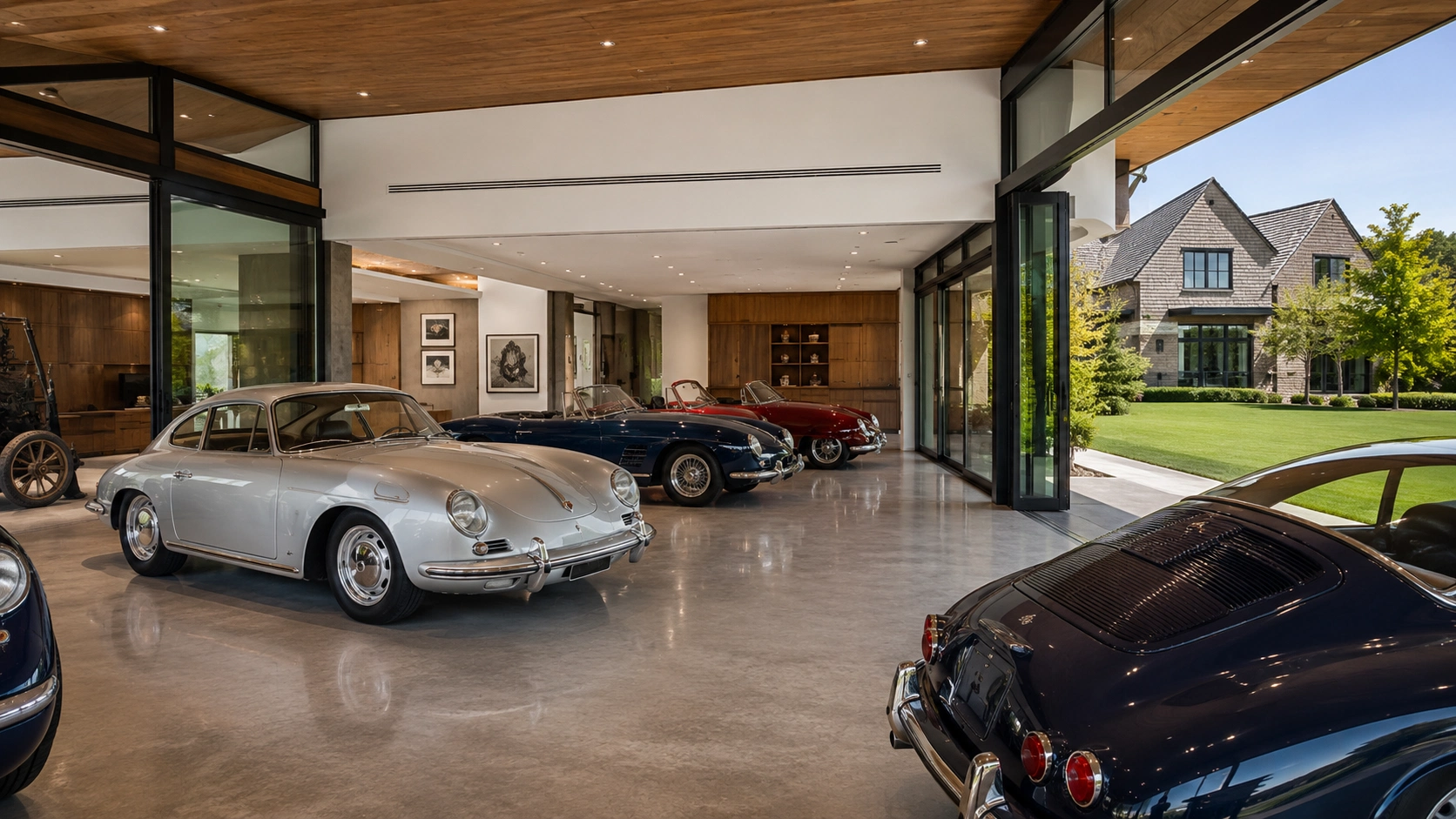
In the exclusive landscape of Sagaponack, the standard residential garage has been replaced by the specialized automotive gallery. Collectors of high-value vehicles require storage environments that function as climate-controlled vaults. These spaces must combine museum-grade aesthetics with industrial-strength infrastructure. Building such a gallery requires a sophisticated understanding of load-bearing physics, atmospheric chemistry, and specialized security systems.
Structural Engineering for High-Density Collections
Standard residential garage slabs are rarely engineered to support the concentrated dead loads associated with heavy vehicle collections, especially when multi-car lifts are used. In Sagaponack, the gallery floor is a high-performance structural element. We oversee the engineering of thickened, fiber-reinforced concrete slabs designed to prevent cracking under the localized pressure of hydraulic lift posts. A typical residential slab of four inches is insufficient; we often specify a minimum of six to eight inches of 4,000 PSI concrete with a reinforced rebar grid to ensure long-term stability.
The gallery layout often demands wide, clear-span floor plans that eliminate internal support columns. This requires the use of long-span steel trusses or engineered glulam beams to carry the roof load over expansive widths. A column-free interior ensures that vehicles can be maneuvered without the risk of obstruction. This creates an unobstructed sightline that presents the collection as a primary architectural feature of the estate.
Atmospheric Control and Chemical Mitigation
Protecting high-value automotive assets requires a departure from standard HVAC design. A vehicle is an assembly of volatile fluids, organic leathers, and sensitive metals that react to environmental changes. We facilitate the installation of specialized climate systems that maintain a constant temperature between 60 and 70 degrees Fahrenheit. Relative humidity is held at a constant 50 percent to prevent both the oxidation of metal components and the catastrophic drying of vintage interior materials.
The gallery must also address the chemical byproducts of the vehicles. Even when stationary, cars can emit fuel vapors, battery gases, and oil particulates. We implement high-volume air exchange systems equipped with carbon filtration and localized exhaust extraction. These systems are programmed to trigger based on air quality sensors that detect volatile organic compounds. This ensures that the air remains free of harmful particulates and odors, which is especially important when the gallery is physically attached to the main residence.
Scenographic Lighting and Optical Clarity
In a private gallery, lighting is used for precise visual presentation. We replace flat, overhead illumination with a layered plan that treats each vehicle as a distinct object. This involves a combination of high-CRI (Color Rendering Index) LED arrays that replicate natural daylight and adjustable track heads that highlight specific engineering details. CRI values of 95 or higher are mandatory to ensure that the paint colors of the collection are rendered with total accuracy.
The choice of glass is equally important. For galleries with large glass facades, we utilize museum-grade, low-iron glass with high UV filtration. Standard glass has a green tint and allows UV rays to penetrate, which can lead to the fading of delicate interior leathers and paint pigments. By using laminated glass with a specialized interlayer, we provide a barrier against both solar damage and forced entry, ensuring the cars are visible with high fidelity at any time of day.
Fire Suppression and Asset Protection
Standard water-based sprinkler systems are inappropriate for high-value automotive collections. Water can cause as much damage to a vintage engine or a bespoke interior as the fire itself. We advocate for clean-agent fire suppression systems such as Novec 1230 or FM-200. These systems are housed in dedicated cylinders and connected to a network of nozzles throughout the gallery.
These systems work by chemically interrupting the combustion process without depleting oxygen or leaving a residue. In the event of a fire, the gas is discharged rapidly to extinguish the flame in seconds. The vehicles remain untouched by moisture or powder, preventing the total loss of an asset that would otherwise occur with traditional water-based or dry-chemical systems. This level of protection is often a requirement for insurance compliance on collections valued in the millions.
The Integrated Maintenance Suite
A professional automotive gallery includes functional zones for active maintenance and detailing. We integrate these suites behind custom cabinetry or minimalist partitions to maintain the gallery aesthetic. This includes built-in compressed air lines, central vacuum systems for interior detailing, and concealed drainage channels with oil-water separators. These separators are a technical requirement to ensure that no petroleum products enter the local groundwater system during wash-down procedures.
By using industrial-grade epoxy or thick-set porcelain tile flooring, we ensure the gallery remains resistant to chemical spills and tire marking. These spaces are often equipped with biometric access controls and constant telemetric monitoring. The owner receives real-time data on the environment and security of the collection via a secure mobile interface. This approach ensures the gallery is a high-performance facility that supports the long-term preservation of the vehicles.
Conclusion
Constructing an automotive gallery in Sagaponack is a technical endeavor that requires a synthesis of industrial technology and precise design. It is a process of creating a controlled environment where the laws of physics and chemistry are managed to protect valuable mechanical assets. Success is measured by the absolute stability of the atmosphere and the flawless presentation of the vehicles.
A custom gallery is a functional investment in the longevity and value of the collection. By prioritizing the invisible infrastructure, from structural slab reinforcement to clean-agent fire suppression, a collector can maintain their assets with total security. This disciplined approach to automotive storage defines the most sophisticated private collections in the region.