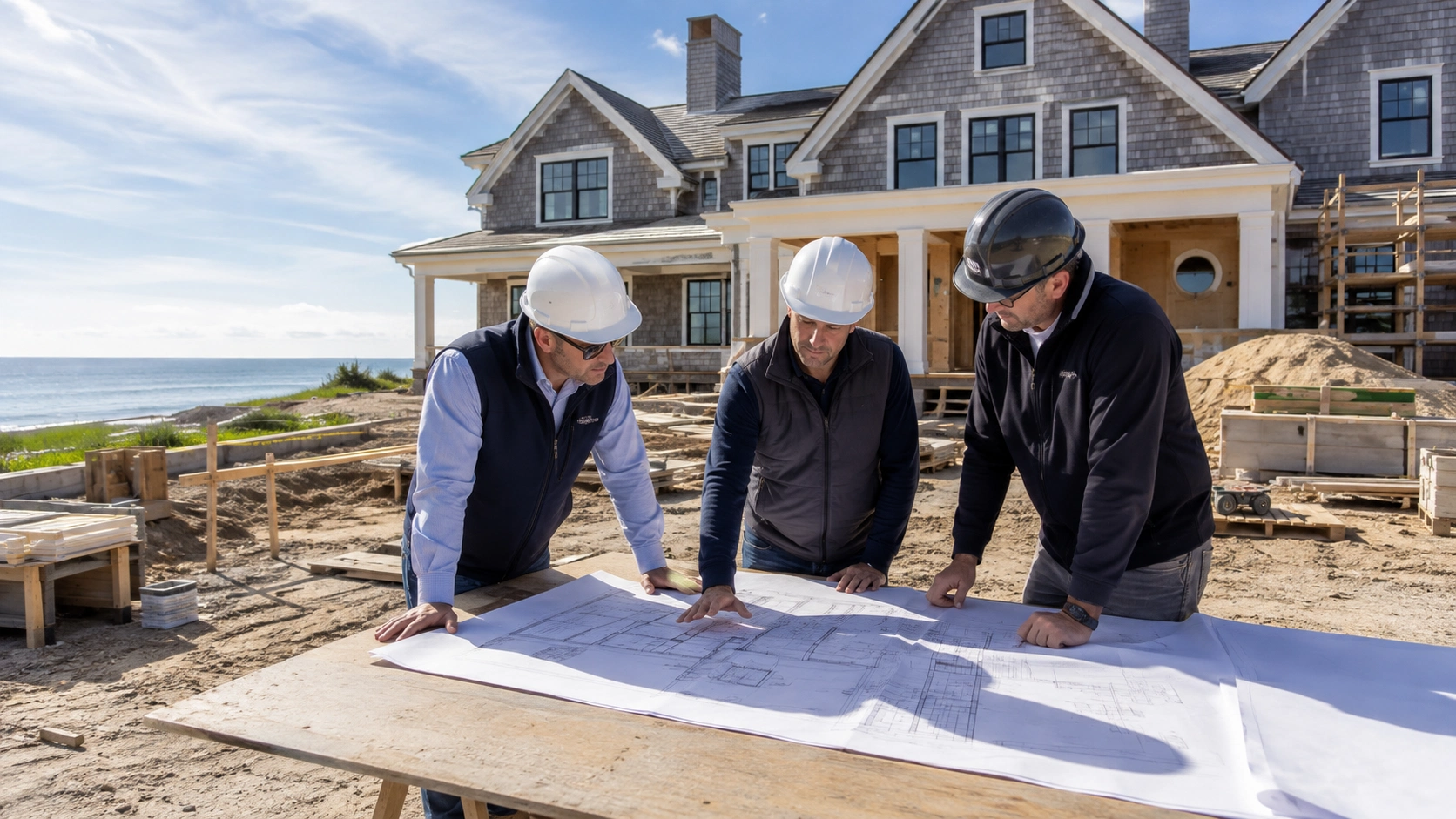
Westhampton is home to many significant twentieth-century estates that possess an architectural charm difficult to replicate in new construction. However, the thick masonry, plaster walls, and aging electrical grids of these older homes often act as a barrier to the seamless digital experiences expected today. Retrofitting these properties for the 2026 smart home era requires a transition from visible gadgets to invisible, AI-driven ecosystems that prioritize future-proof infrastructure without compromising the home’s historic integrity.
Overcoming the Structural Shield
The most common hurdle in a Westhampton retrofit is the physical composition of the house. Twentieth-century building materials, particularly dense plaster and wire lath, are remarkably effective at blocking Wi-Fi and cellular signals. Relying on a single consumer-grade router is an exercise in futility. Instead, we implement enterprise-grade mesh networks and Power-over-Ethernet (PoE) backbones that move the data through the walls via hidden low-voltage wiring.
This hardwired approach is essential for the reliability of 4K security feeds and high-fidelity audio systems. By utilizing existing utility chases or discreetly running cables behind crown moldings, we can establish a high-gigabit network throughout the house. This invisible “digital plumbing” ensures that the estate’s connectivity is as robust as a modern build, providing the bandwidth necessary for the dozens of connected devices that now define a luxury interior.
The Rise of Universal Interoperability
For years, the smart home market was fragmented by proprietary systems that did not communicate with one another. In 2026, the wide adoption of the Matter protocol has fundamentally changed the landscape. This universal standard allows devices from different manufacturers to work together seamlessly under a single interface. For the owner of an older Westhampton estate, this means that a classic lighting fixture retrofitted with smart modules can now talk directly to a modern HVAC system or a biometric security lock.
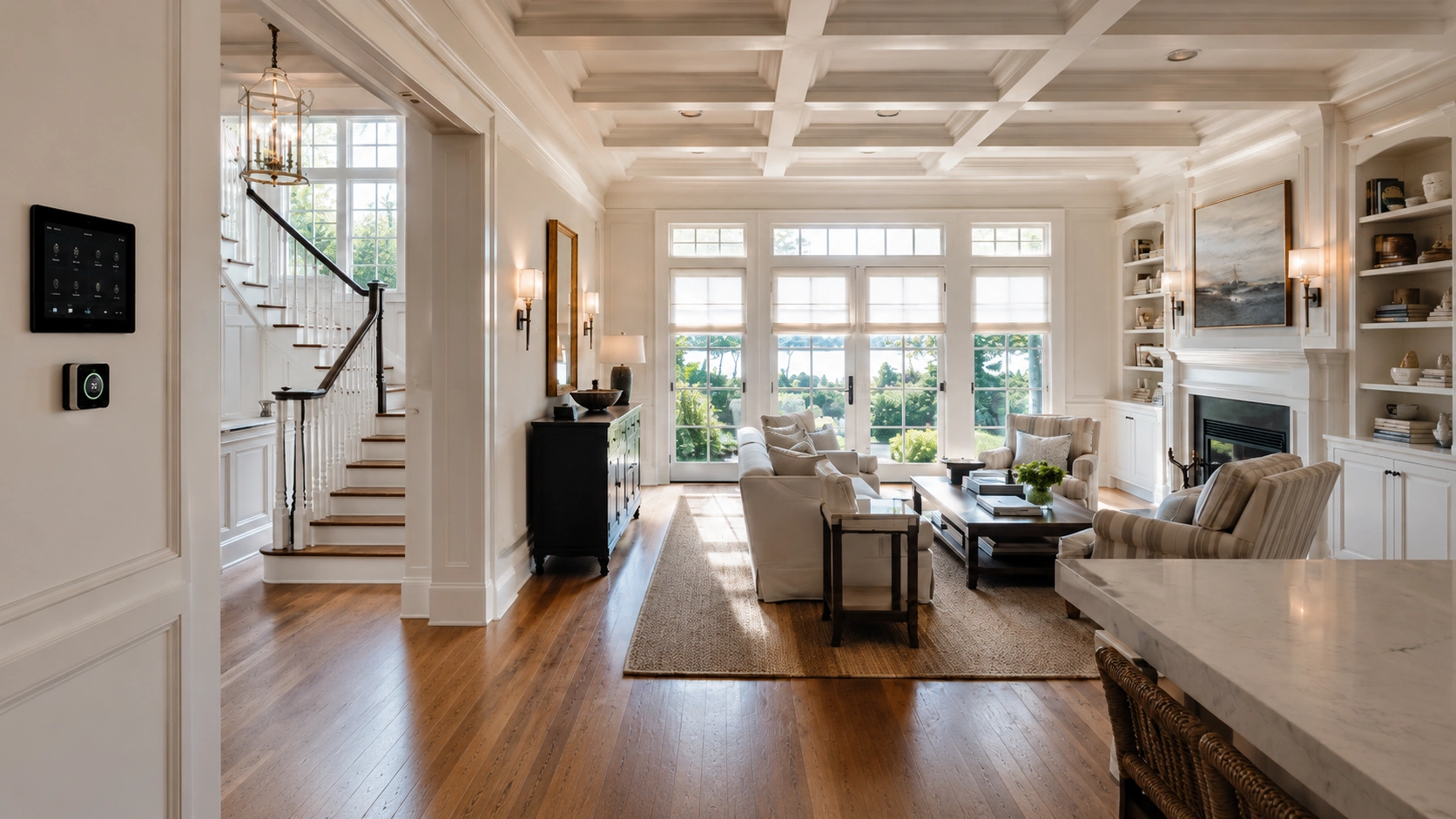
The benefit of this interoperability is the elimination of “app fatigue.” We prioritize systems that unify the home’s core functions—lighting, climate, and security—into a single, intuitive dashboard. This allows the technology to fade into the background, operating through subtle wall panels or voice-activated “intent routers” that understand casual language rather than rigid commands. The result is a home that responds to the inhabitant’s needs without requiring constant manual adjustment.
Invisible Orchestration and Predictive AI
The true hallmark of a 2026 retrofit is predictive automation. Rather than waiting for an instruction, the home utilizes AI to analyze patterns and anticipate needs. In an older estate, this might mean the system recognizes the solar heat gain in a south-facing sunroom and automatically lowers the motorized shades before the room becomes uncomfortable. It is a transition from a reactive home to a proactive sanctuary.
This orchestration extends to energy management. Many Westhampton properties are now integrating smart electrical panels that monitor consumption in real-time. These systems can automatically shift heavy loads, such as pool heating or EV charging, to off-peak hours when electricity rates are lower. By turning the estate into an intelligent micro-grid, we provide the owner with significant operational savings and a level of energy independence that was previously impossible in a twentieth-century structure.
Wellness-Centric Lighting and Air Quality
Modern retrofits are increasingly focused on the biological health of the inhabitants. Circadian lighting systems are a primary feature of these updates, utilizing tunable LEDs to mimic the natural progression of sunlight. In the morning, the system introduces cool, blue-toned light to promote alertness, gradually transitioning to warm, amber tones in the evening to support the body’s natural sleep cycles.
Furthermore, we integrate air and water quality sensors that trigger the home’s ventilation and filtration systems automatically. In older homes where air exchange can be inconsistent, these smart triggers are vital. If the system detects a rise in CO2 or volatile organic compounds during a large gathering, it increases the fresh air intake immediately. This ensures that the historic environment remains a healthy, high-performance space for modern living.
Frictionless Security and Biometric Access
Traditional security in Westhampton often relied on intrusive keypads and bulky cameras. The 2026 era focuses on frictionless, biometric access. We replace outdated locks with subtle, touchless entry systems that utilize facial recognition or encrypted phone signals. This allows the owner to move through the property without the need for physical keys or codes, maintaining a clean aesthetic on historic entryways.
Surveillance has also evolved from simple recording to behavioral understanding. AI-powered cameras can now distinguish between a resident, a delivery person, and a potential threat, filtering out false alarms caused by animals or falling branches. These systems provide a perimeter of protection that is both more effective and less noticeable than the technology of a decade ago. This holistic approach to security provides total peace of mind while respecting the privacy and visual tranquility of the estate.
Conclusion
Retrofitting a twentieth-century Westhampton estate for the modern era is an act of preservation through innovation. It is about ensuring that a home with deep architectural roots can still meet the high-performance demands of a contemporary lifestyle. By focusing on invisible infrastructure and predictive technology, we can transform a static historical asset into an adaptive, intelligent sanctuary.
The success of a smart-home retrofit is measured by how little the technology is noticed. When the systems are integrated with a disciplined eye, the home functions with an effortless precision that enhances the owner’s daily life. This commitment to technical excellence ensures that the estate remains relevant, resilient, and highly valued in a market that increasingly prioritizes the “hidden” intelligence of a residence.