Amagansett is characterized by its unique geographical positioning, where low-lying coastal meadows and maritime forests often sit just a few feet above the subterranean water level. For property owners in areas such as Beach Hampton or the Lanes, the presence of a high-water table is the primary technical hurdle to a successful build. In these environments, construction is a precision exercise in keeping the Atlantic at bay. Managing the persistent threat of groundwater requires a departure from standard residential practices, favoring instead specialized hydraulic engineering and moisture-mitigation strategies.
Subsurface Hydrology and Soil Analysis
The first phase of a high-stakes build in Amagansett involves a deep diagnostic of the site’s hydrology. Because groundwater levels in the Hamptons fluctuate with the seasons and tidal cycles, a single soil test is often insufficient. We facilitate multi-season groundwater monitoring to determine the Seasonal High Ground Water (SHGW) elevation. This data point is the most critical metric in the project, as it dictates the maximum allowable depth of the foundation and the necessity of specific drainage infrastructure.
Understanding the soil composition is equally vital. Amagansett’s soil can vary from fast-draining glacial sand to heavy, impermeable clay pockets. By conducting comprehensive boring tests, we determine the soil’s “percolation rate” and structural load-bearing capacity. This ensures that the foundation is not just resting on the earth, but is engineered to remain stable even when the surrounding ground is fully saturated.
The Buoyancy Factor: Anchoring the Structure
One of the most overlooked risks in high-water table engineering is buoyancy. When a basement or foundation is built below the water level, it acts like the hull of a ship. If the upward pressure of the groundwater—known as hydrostatic pressure—is greater than the weight of the structure, the entire house can shift or “float,” leading to catastrophic structural failure.
To counter this, we oversee the installation of specialized anchoring systems. This may include the use of helical piles or tension anchors that tie the foundation slab deep into more stable sub-strata. In extreme cases, we implement “thickened slabs” or weighted mud-mats that provide the necessary ballast to keep the structure immobile. This level of invisible engineering ensures that the home remains perfectly level and structurally sound, regardless of the hydraulic forces exerted from below.
Redundant Waterproofing and Negative-Side Defense
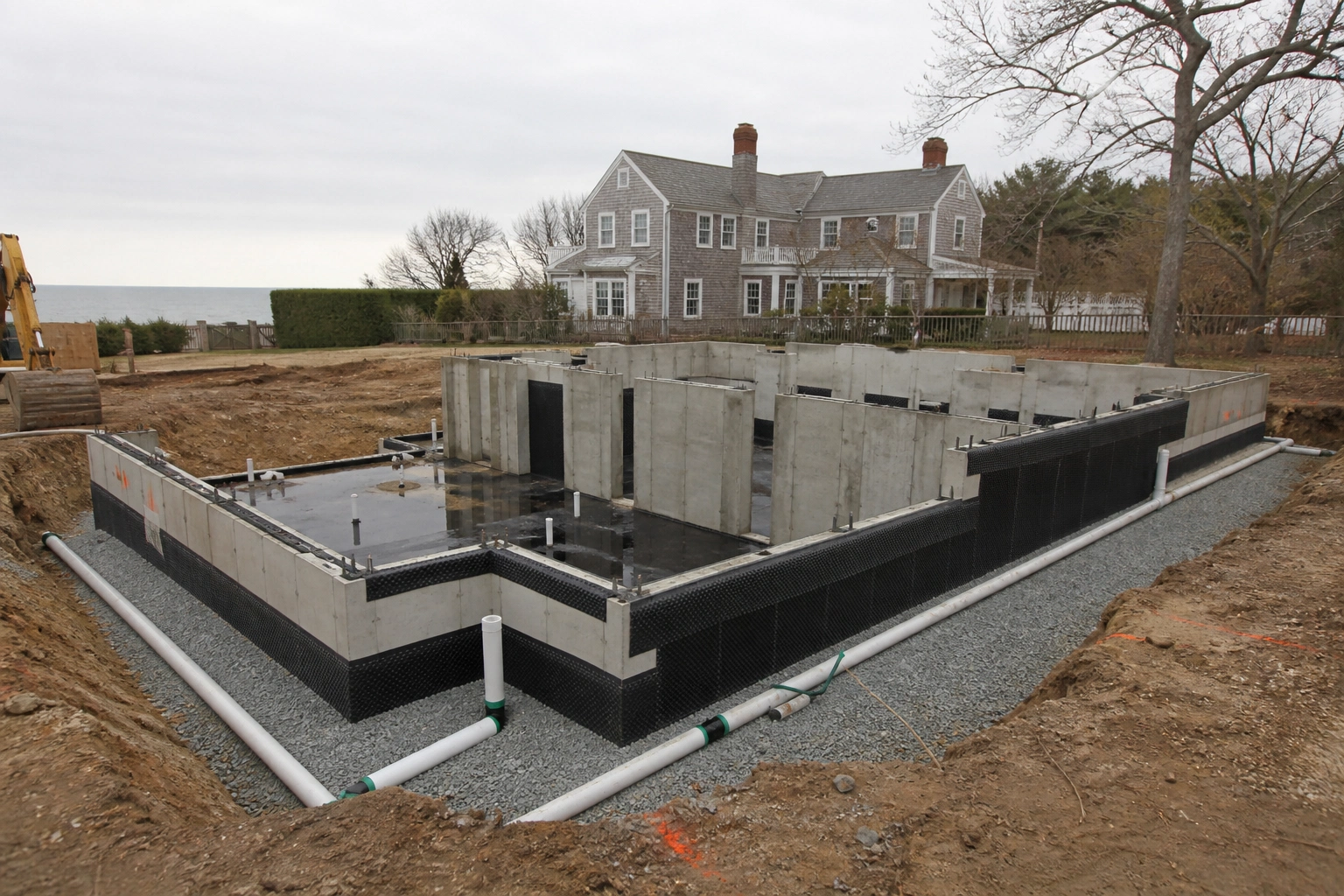
Standard damp-proofing is entirely inadequate for the Amagansett water table. We advocate for a “belt and suspenders” approach to waterproofing. This involves a primary exterior barrier, often a heavy-duty polymer-modified bitumen membrane, paired with a secondary crystalline waterproof coating applied to the interior of the concrete walls.
Crystalline technology is particularly effective because it reacts with moisture to grow microscopic crystals that fill the pores and capillary tracts of the concrete. This effectively turns the foundation itself into an impermeable barrier. For additional security, we ensure the installation of “water stops” at every construction joint—the areas where the floor meets the wall—which are the most common points of ingress for groundwater. This multi-layered defense creates a vault-like environment for lower-level living spaces.
Perimeter Drainage and Hydrostatic Relief
A foundation should never sit in a stagnant pool of water. Effective site management in Amagansett requires a proactive drainage network that moves water away from the structure as quickly as it arrives. This is achieved through a combination of “French drains” and high-capacity perimeter footings.
We oversee the grading of the site to ensure that surface water is directed toward specialized “dry wells” or bioswales located at a safe distance from the residence. For below-grade spaces, we implement hydrostatic relief valves and industrial-grade duplex sump pump systems. These pumps are programmed to operate in tandem during heavy rain events and are equipped with secondary battery backups and telemetric alarms. This ensures the owner is notified of any mechanical issues long before moisture becomes a threat to the home.
The Role of Geothermal Integration
In many high-water table projects in Amagansett, the presence of groundwater can actually be leveraged as a thermal resource. Geothermal heat pump systems utilize the constant temperature of the earth to provide highly efficient heating and cooling. In sites with high saturation, the heat transfer between the ground loops and the surrounding water is significantly more efficient than in dry soil.
We coordinate the integration of these geothermal loops during the early excavation phase. By combining the drainage strategy with the home’s mechanical requirements, we turn a geological challenge into a sustainable asset. This integrated approach reduces the home’s carbon footprint and long-term utility costs, adding another layer of sophistication to the estate’s infrastructure.
Conclusion
Building in a high-water table environment like Amagansett requires a total commitment to technical excellence. The margin for error is non-existent; a single oversight in the waterproofing membrane or a miscalculation in soil pressure can lead to decades of maintenance issues. Success in these projects is measured by the absolute dryness and stability of the home’s lowest levels, regardless of the external conditions.
Ultimately, managing the complexities of Amagansett’s subsurface requires a disciplined, engineering-first mindset. By prioritizing advanced drainage solutions and structural anchoring, a property owner can build with confidence on even the most challenging coastal lots. This focus on the “invisible” side of construction is what ensures a residence is not only beautiful upon completion but remains a secure and resilient asset for the long term.