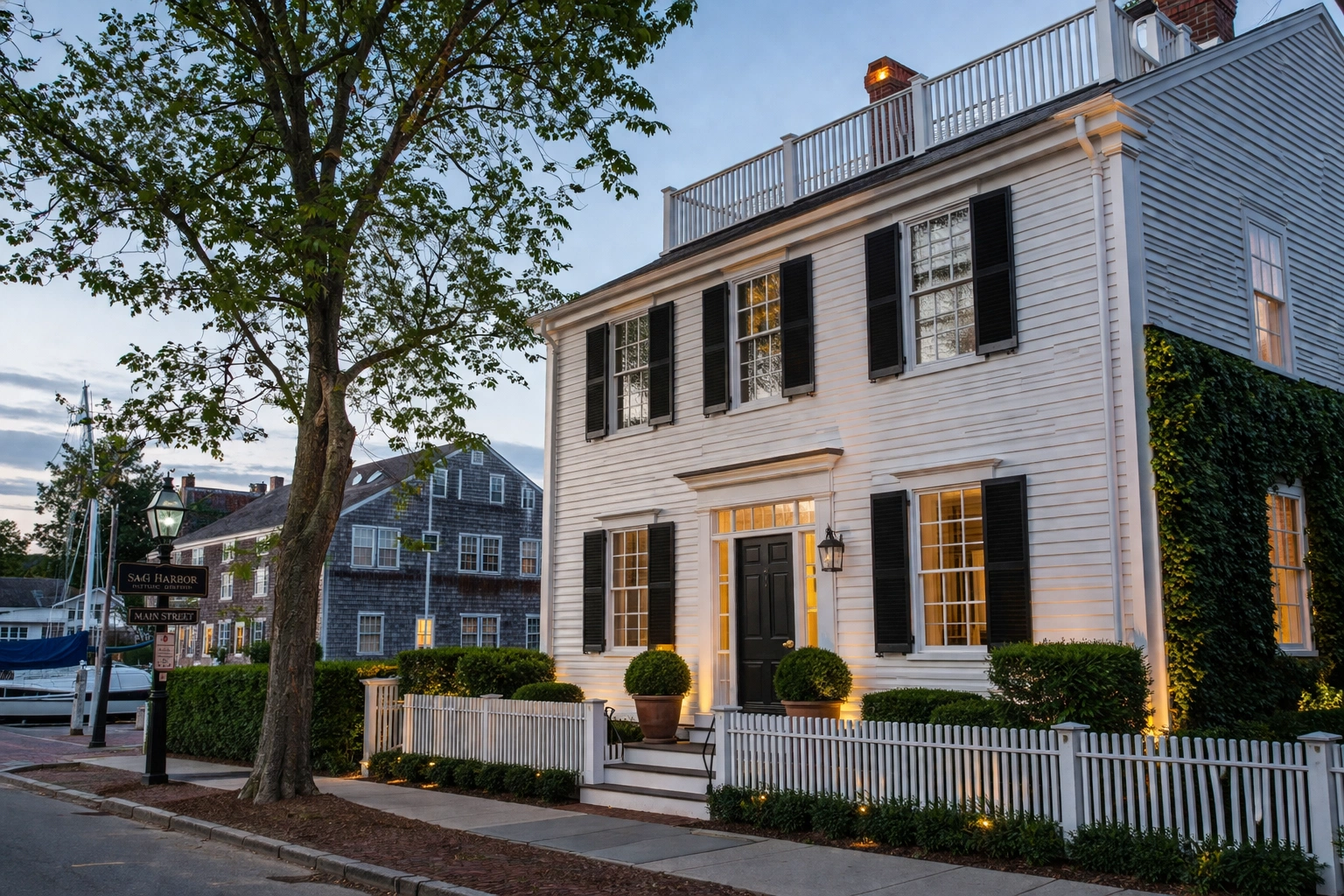
Sag Harbor is a village defined by its layers of history, from its origin as a premier whaling port to its status as a literary retreat. Unlike the expansive ground-up builds of Bridgehampton or Sagaponack, projects here often involve the delicate restoration of timber-frame cottages and federal-style captain’s houses. Modernizing these structures requires a surgical approach that respects the local architectural vernacular while integrating the high-performance infrastructure expected in a modern luxury residence. The goal is a seamless transition where the home’s historical soul remains visible beneath a sophisticated contemporary skin.
Navigating the Sag Harbor Board of Historic Preservation
Any renovation in Sag Harbor begins with the Board of Historic Preservation and Architectural Review. The village is deeply protective of its streetscapes, and the regulations regarding facades, window proportions, and material choices are some of the most stringent in the country. A successful modernization strategy avoids the imitation of history and instead focuses on authentic restoration of the street-facing exterior while allowing for contemporary expression in the rear and interior.
We coordinate with preservation consultants early in the process to ensure that all proposed changes, such as the addition of a modern glass conservatory or the expansion of a kitchen wing, remain within the character of the historic district. This involves sourcing authentic materials, such as reclaimed cedar shingles and custom-milled wood windows with true divided lites, to satisfy the board’s requirements. By treating the regulatory process as a framework for quality rather than a hurdle, we ensure the project moves forward without the delays that often stall less-informed renovations.
Structural Stabilization of Timber-Frame Heritage
Many of Sag Harbor’s historic homes were built using post-and-beam construction, often resting on foundations of stacked fieldstone or brick. Over two centuries, these structures inevitably settle, leading to uneven floors and compromised structural integrity. Modernizing these homes requires a top-down and bottom-up stabilization process.
We oversee the careful jacking and leveling of the original timber frame, followed by the installation of a new, reinforced concrete foundation or a series of helical piles. This provides the home with a modern structural spine capable of supporting contemporary open-plan layouts. By reinforcing the original hand-hewn beams with hidden steel plates, a process known as flitching, we preserve the aesthetic of the exposed woodwork while meeting modern load-bearing codes. This ensures the home is structurally prepared for another century of use.
Integrating Invisible Performance Systems
The primary challenge of a historic renovation is the placement of modern infrastructure. In a captain’s house built in the mid-nineteenth century, there are no cavities for large-scale HVAC ductwork or sophisticated smart-home wiring. Forcing these systems into a historic home often results in lowered ceilings and ruined proportions.
Instead, we utilize small-duct, high-velocity cooling systems and radiant floor heating. These technologies allow for climate control that is felt but not seen, preserving the original ceiling heights and intricate crown moldings. For the electrical and digital infrastructure, we utilize wireless control systems and bus wiring that can be snaked through original wall cavities with minimal disruption to the lath and plaster. This approach ensures that the home functions with the intelligence of a modern build while maintaining the tactile charm of an antique.
The Modern Rear Addition
A common strategy in Sag Harbor is the glass-box addition. This involves maintaining the historic facade while adding a contemporary wing at the back of the property that opens up to the garden or pool area. This architectural dialogue allows for a cozy, historic front parlor and a bright, expansive modern kitchen and living space.
We manage the technical connection between the old and the new, focusing on thermal breaks and expansion joints that allow the two structures to move independently. This prevents cracking in the original masonry or plaster as the new addition settles. By utilizing minimalist steel frames and high-performance glazing, these additions provide the indoor-outdoor connectivity that is the hallmark of Hamptons living without obscuring the historic profile of the original house.
Artisanal Restoration and Material Authenticity
Modernizing a historic home is as much about what you keep as what you replace. We prioritize the restoration of original features, such as wide-plank pumpkin pine floors, hand-forged iron hardware, and wavy-glass window panes. When materials must be replaced, we source from specialized local craftsmen who can replicate the hand of a nineteenth-century artisan.
This commitment to material authenticity extends to the finishes. We utilize breathable mineral paints and lime washes that are chemically compatible with historic masonry, preventing the moisture-trap issues that lead to rot in older homes. This focus on the chemistry of the house ensures that the renovation is not just a cosmetic update but a deep, restorative process that honors the building’s maritime heritage.
Conclusion
Revitalizing a historic home in Sag Harbor is a pursuit that requires patience, technical expertise, and a profound respect for the village’s past. It is a process of uncovering the original intent of the builders and carefully layering in the comforts and efficiencies of the modern era. When executed with precision, these renovations create a unique residence that possesses a character and a story that no ground-up construction can replicate.
Success in these projects is measured by the invisibility of the intervention. The home should feel timeless, functioning with effortless modern performance while still echoing the footsteps of the generations that came before. By navigating the complexities of historic preservation and structural stabilization with a disciplined eye, property owners can ensure that their Sag Harbor home remains a vital and enduring piece of the village’s living history.