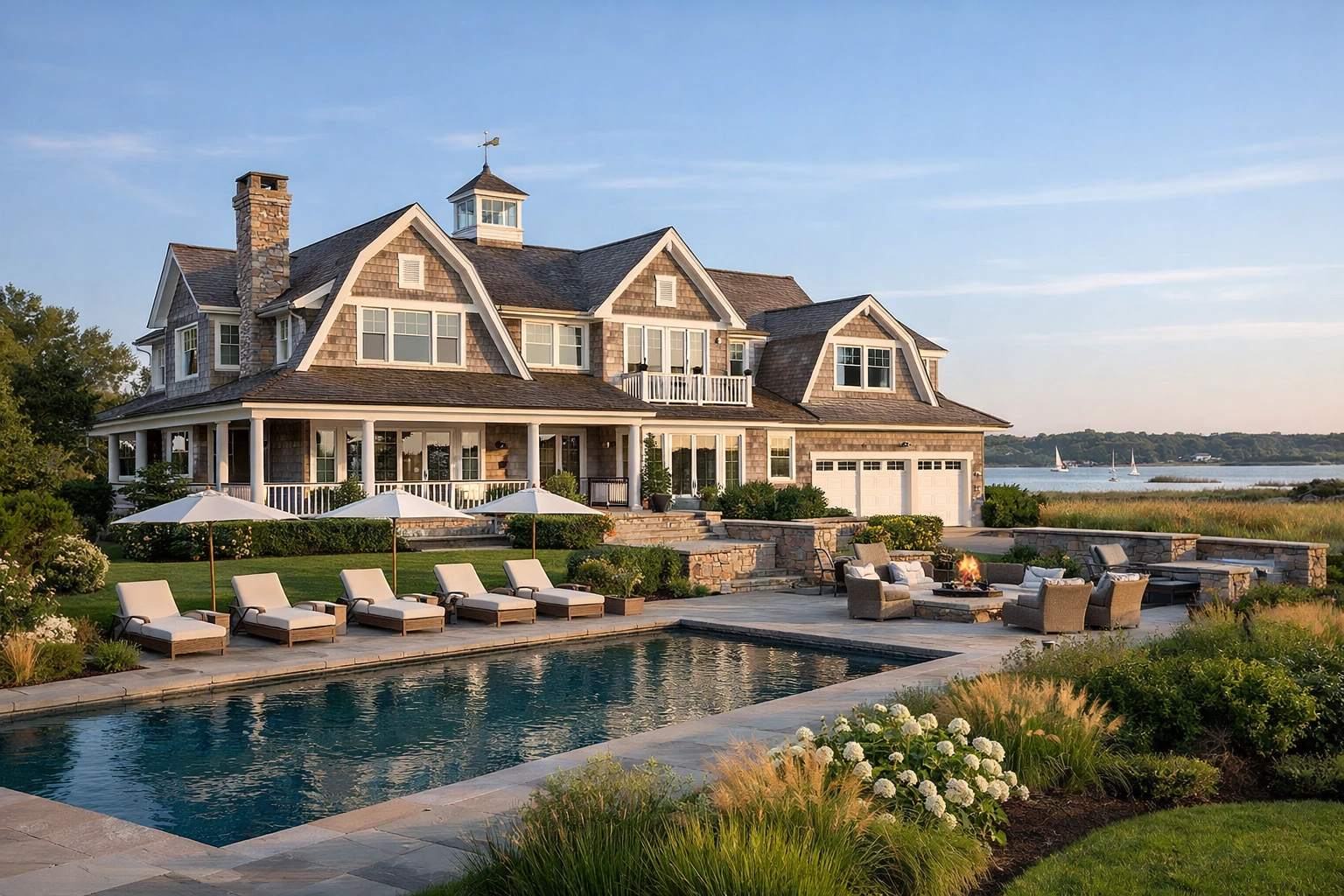
Building on the Montauk peninsula presents a unique set of environmental challenges that differ significantly from the more sheltered bays of the inner Hamptons. Here, architecture must account for the raw kinetic energy of the Atlantic Ocean, characterized by high-velocity salt spray, shifting dune topographies, and the constant pressure of coastal wind loads. Ensuring the longevity of a Montauk estate requires a shift in focus from purely aesthetic design toward advanced coastal engineering and structural resilience.
The Physics of the Montauk Coastline
Montauk’s geography exposes residences to weather patterns that are more intense than those found in the village centers of East Hampton or Southampton. The combination of high bluffs and low-lying beachfront creates distinct micro-climates where wind speeds can significantly exceed inland averages. Structural engineering for these properties begins with the building envelope. We prioritize the use of high-performance materials that can withstand the corrosive nature of salt-heavy air.
This includes the use of marine-grade stainless steel fasteners, specialized flashing systems, and high-impact glazing that meets or exceeds hurricane-zone requirements. By addressing these physical stressors at the foundational level, we ensure that the home’s exterior remains a viable barrier against the elements for decades.
Navigating FEMA and the Coastal Erosion Hazard Area
Permitting in Montauk is heavily dictated by the Federal Emergency Management Agency and the Town of East Hampton’s Coastal Erosion Hazard Area regulations. These agencies establish the Velocity Zone boundaries, which identify areas at high risk for wave action and flooding. A critical component of coastal resiliency is the establishment of the Base Flood Elevation.
In many Montauk builds, this requires the home to be elevated on specialized open-piling foundations or heavy-duty masonry piers designed to allow storm surges to pass beneath the structure without compromising its stability. We coordinate closely with coastal engineers to ensure that these heights are calculated with future sea-level rise in mind, providing an extra layer of protection for the owner’s long-term investment.
The Engineering of Invisible Protection
Resiliency is often found in the systems that are never seen. For oceanfront estates in Montauk, moisture management is the primary battle. The pressure of wind-driven rain can force water into even the smallest architectural reveals. We oversee the installation of advanced rain-screen systems and redundant waterproofing membranes that allow the building to breathe while preventing water intrusion.
Furthermore, the mechanical systems of a Montauk home must be specially protected. We utilize elevated mechanical platforms and protective enclosures for HVAC condensers to prevent premature failure due to salt-air corrosion. This invisible engineering ensures that the home continues to function at peak efficiency regardless of the external conditions.
Landscaping as a Structural Defense
In Montauk, the landscape is not merely a decorative element but a vital part of the home’s defense system. Native vegetation plays a crucial role in stabilizing the dune structures and preventing soil erosion during heavy storm events. Our management of the site plan includes a focus on bio-engineering.
This involves the strategic use of American beach grass, bayberry, and other salt-tolerant species that anchor the soil and provide a natural buffer against wind and spray. By integrating the natural landscape into the structural plan, we create a residence that works in harmony with the Montauk environment rather than in opposition to it.
Redundancy in Power and Infrastructure
The remote nature of Montauk means that utility disruptions are more frequent than in other parts of the Hamptons. A resilient home must be capable of autonomous operation during and after a storm event. We prioritize the integration of high-capacity backup power systems and critical-load electrical panels.
Whether through traditional generator systems or advanced battery storage paired with solar arrays, these systems ensure that climate control, security, and communication remain operational during grid outages. This infrastructure of redundancy transforms a coastal house into a secure, year-round sanctuary capable of maintaining its internal environment when local infrastructure is compromised.
Conclusion
Building on the Atlantic’s edge in Montauk is a feat of engineering as much as it is an act of design. The complexity of these projects demands a high level of technical oversight to ensure that every structural decision is made with the ocean’s power in mind. From the depth of the pilings to the grade of the window seals, the success of a Montauk build is measured by its ability to remain unchanged by the environment that surrounds it.
Achieving this level of resiliency requires a disciplined approach to construction management where quality assurance is the primary objective at every stage of the project. By prioritizing structural integrity and environmental adaptability, a coastal estate can serve as a lasting sanctuary. This rigorous standard of care ensures that the residence not only meets the aesthetic vision of the owner but also possesses the engineering required to endure the unique atmospheric demands of the Montauk coastline.