Shelter Island occupies a unique logistical position in the Hamptons. Accessible only by ferry and reliant on underwater power cables from the mainland, the island presents a distinct case for energy self-sufficiency. For high-end estates on the island, the traditional reliance on the electrical grid and fossil fuels is increasingly being replaced by a sophisticated pairing of geothermal and solar energy. This move toward sustainable power is not merely an environmental choice but a strategic response to the island’s remote geography and the 2026 shifts in New York State’s energy mandates.
The Evolution of Geothermal on Shelter Island
Historically, geothermal systems faced regulatory hurdles on Shelter Island due to concerns regarding the sensitive aquifer. However, modern closed-loop technology has transformed the conversation. Unlike older “open” systems that exchanged water directly with the ground, contemporary “slinky” or vertical closed-loop systems use a sealed piping network. This allows for the extraction of heat from the stable 55-degree subsurface temperature without ever coming into contact with the island’s water supply.
For the Shelter Island estate owner, geothermal represents the most efficient method of space conditioning available. By utilizing the earth as a heat sink in the summer and a heat source in the winter, these systems operate with nearly 400 percent efficiency. As New York building codes now heavily favor heat pump technology for new constructions, geothermal has emerged as the premier choice for large-scale properties that require consistent, year-round climate control without the visual or auditory footprint of traditional outdoor condensers.
Maximizing Solar Capture in Secluded Settings
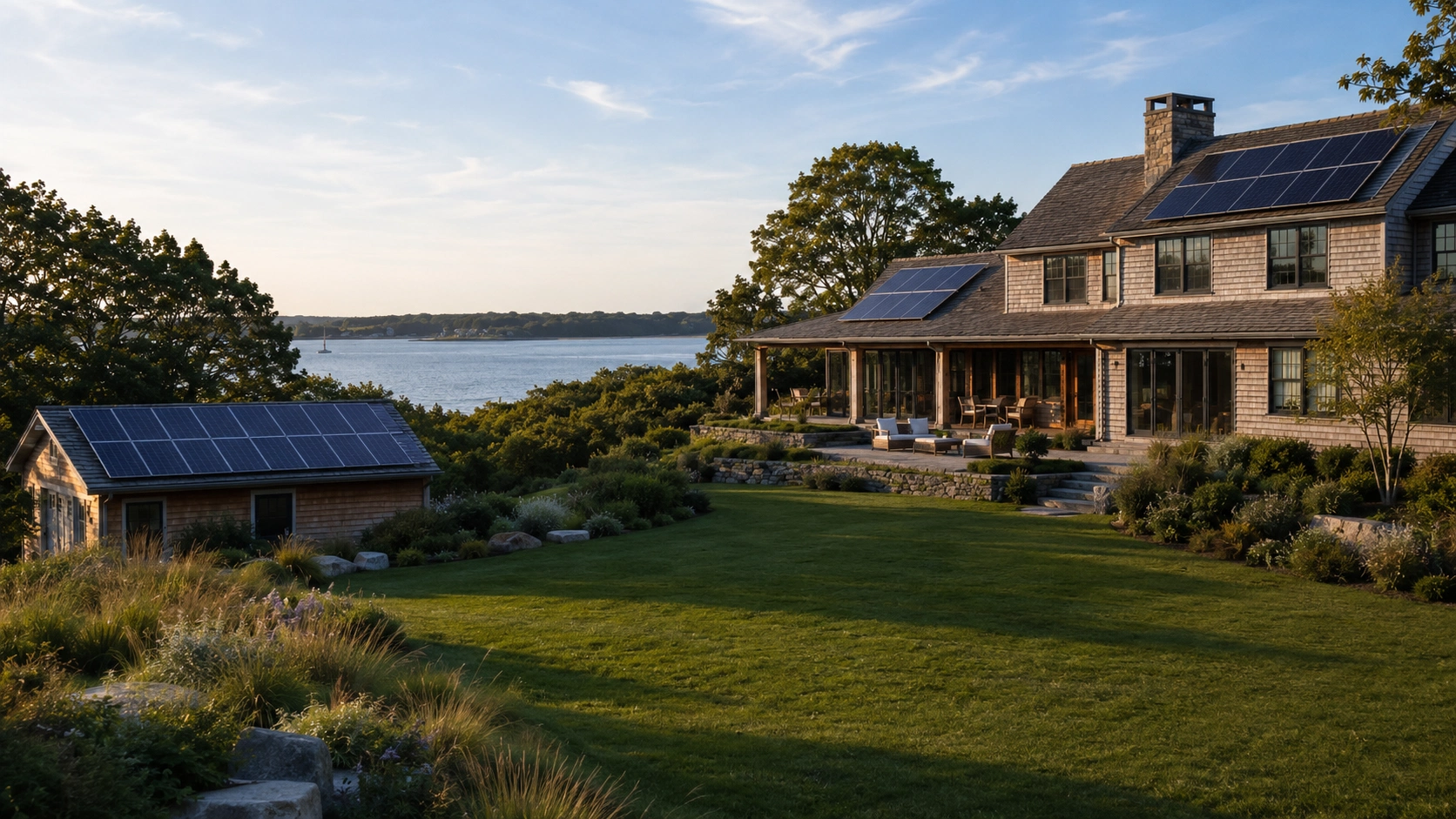
While solar energy is often associated with rooftop panels, Shelter Island’s expansive, wooded lots allow for more creative and high-output installations. Remote estates frequently opt for ground-mounted arrays or “solar structures” that double as carports or pool cabanas. This approach bypasses the architectural limitations of historic rooflines and allows for optimal orientation toward the southern sun.
In 2026, the efficiency of solar PV modules has reached a point where even partially shaded lots can generate significant wattage. By integrating battery storage systems, such as the latest lithium-iron-phosphate (LFP) units, an estate can capture excess energy during the day to power the home through the evening. This creates a redundant power source that is particularly valuable during the seasonal storms that can occasionally isolate the island from the mainland grid.
The Synergy of the Integrated Micro-Grid
The true breakthrough in remote estate management is the integration of geothermal and solar into a singular, smart micro-grid. Geothermal systems, while highly efficient, still require electricity to run the circulating pumps and compressors. Solar energy provides the clean, on-site power to meet this demand.
When these systems are paired with a smart-home energy management system, the estate can prioritize loads in real-time. For instance, the system can use peak solar production during the afternoon to “pre-cool” the home using the geothermal loops, effectively storing thermal energy in the structure itself. This synergy reduces the overall demand on the battery storage and ensures that the home remains comfortable even during extended power disruptions.
Reliability and the Island Lifecycle
Maintenance and reliability are paramount for properties on Shelter Island, where service calls for specialized mechanical equipment can be logistically challenging. Geothermal systems are notably long-lived, with indoor components lasting twenty-five years and underground loops often functioning for half a century.
Because the majority of the system is buried and protected from the salt air and coastal wind, the rate of mechanical failure is significantly lower than that of air-source heat pumps or traditional furnaces. Similarly, modern solar arrays require minimal maintenance beyond occasional cleaning. For the global owner who may not be in residence year-round, this “set it and forget it” reliability provides an essential layer of peace of mind.
Protecting the Island’s Natural Integrity
Shelter Island’s appeal lies in its preserved natural beauty and quiet atmosphere. Traditional energy solutions—such as large propane tanks and noisy generators—can detract from the very environment that owners seek to enjoy. Geothermal and solar are inherently silent and largely invisible.
By eliminating the need for fossil fuel deliveries and reducing the estate’s carbon footprint, these technologies align with the community’s broader goals of conservation. For the modern estate owner, investing in sustainable power is a way to future-proof the property’s value while honoring the environmental sensitivity of the island.
Conclusion
Transitioning to a sustainable power model on Shelter Island is a practical evolution for the modern estate. The combination of geothermal efficiency and solar generation addresses the unique geographical vulnerabilities of the island while meeting the high performance demands of a luxury residence. By creating an independent energy infrastructure, property owners can ensure that their sanctuary remains fully operational and comfortable regardless of external grid conditions.
Ultimately, the move toward integrated renewable systems represents a standard of care that prioritizes both long-term resilience and environmental stewardship. As energy mandates continue to evolve, the estates that have invested in these invisible, high-performance infrastructures will remain at the forefront of the market. This disciplined approach to power management is the cornerstone of a truly modern and self-sufficient Hamptons home.